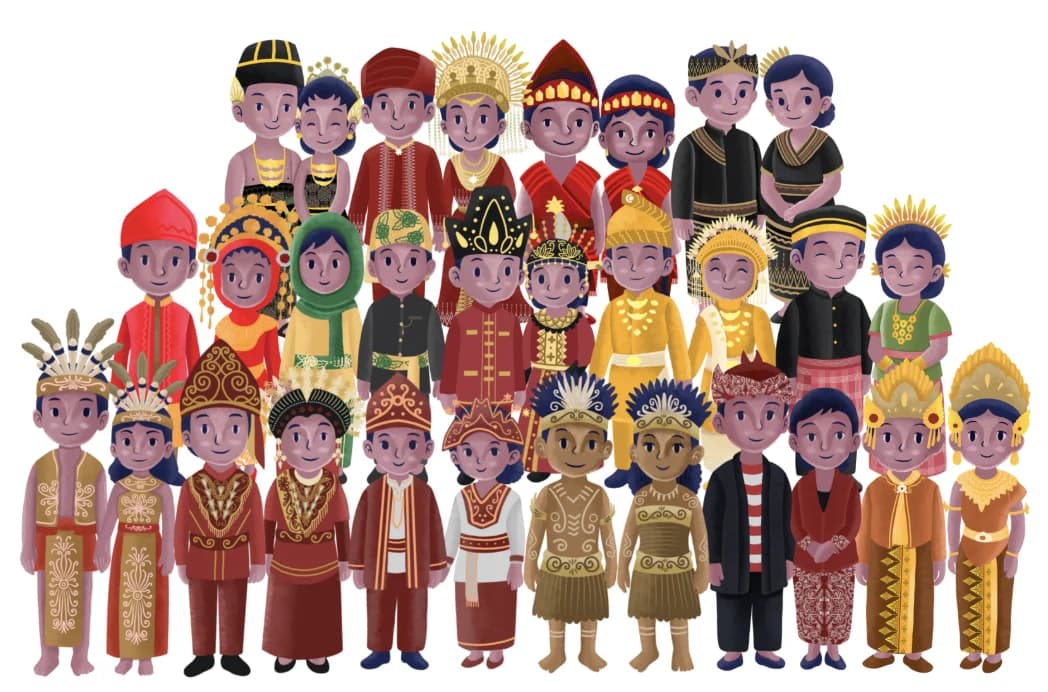
The traditional dress of NTT isn't one costume but many, and it changes from tribe to tribe. From Rote's Tenun Ikat and Ti'i Langga hat to Sumba's Hinggi and Manggarai's Kain Songke, each has its own name and meaning. Here are seven of the best-known traditional costumes of NTT and the tribes they come from.
Why NTT's traditional dress is so varied
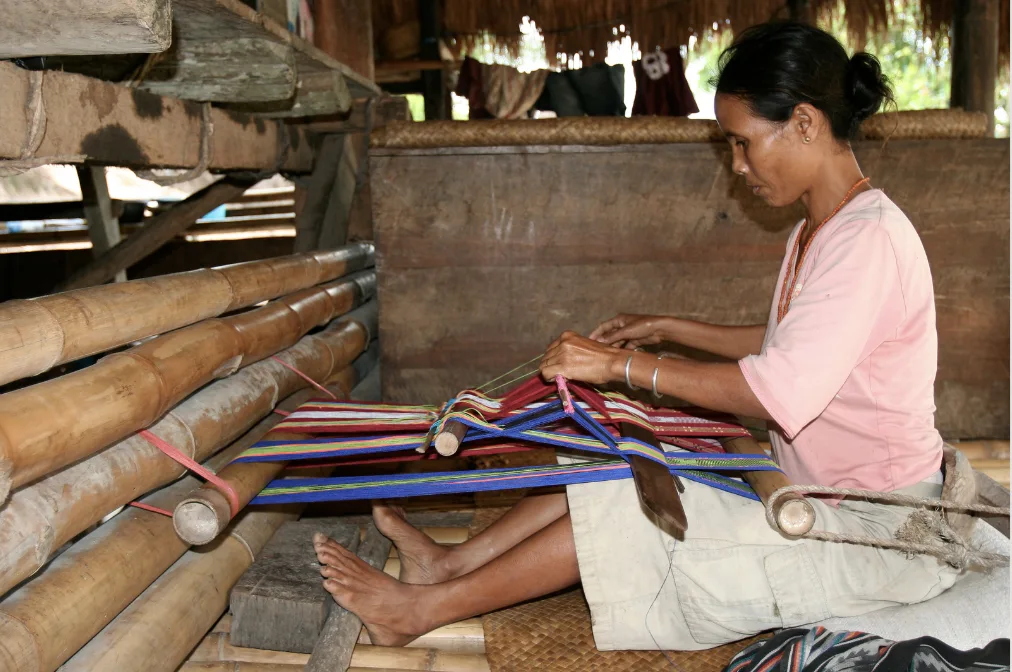
East Nusa Tenggara is made up of many islands, from Timor, Sumba, Flores, Rote and Sabu to Alor and Lembata, and on each live different tribes with their own languages and customs. So there's no single, uniform "NTT traditional dress"; each tribe has its own attire, names, and rules for wearing it. Even so, one thread ties almost all of it together: hand-woven ikat cloth. Understanding NTT's traditional dress means embracing that variety, not flattening it into a single form.
The named traditional costumes of NTT
1. Tenun Ikat and Ti'i Langga (Rote tribe). Rote's dress has become one of the icons of NTT. The top is an ikat-woven cloth, often paired with a long white shirt, while the headpiece, the Ti'i Langga, is a hat made from dried lontar palm leaf, shaped a little like a Mexican sombrero.
2. Hinggi (Sumba tribe). A Sumbanese man's dress uses two woven cloths, the Hinggi Kombu and Hinggi Kawuru. The head is wrapped with a band called Tiara Patang, shaped into a crest.
3. Sabu tribe dress (Sabu Island, Sabu Raijua). For men, a long-sleeved white shirt is worn over a cotton woven sarong. The sarong's motif and colour signal the wearer's origin and standing.
4. Amarasi (Dawan tribe, mainland Timor). The Dawan costume, called Amarasi, pairs a kebaya with a shawl across the chest and a woven sarong below.
5. Helong tribe dress (around Kupang and Semau Island). Helong women wear a kebaya or kemben with a sarong secured by a gold belt (pending). The crescent-shaped headpiece is called bula molik.
6. Tenun Ikat Patola (Lio tribe, Ende, Flores). The Lio people preserve a cloth called Tenun Ikat Patola. It was once worn only by chiefs and royalty, which is part of why it carries such high value.
7. Kain Songke (Manggarai tribe, western Flores). Kain Songke is the essential dress for Manggarai women, worn like a sarong and dominated by black, a colour that stands for dignity and grandeur.
pakaian adat ntt
- Classification (topi khas Rote)
- Ti'i Langga, topi khas suku Rote dari daun lontar kering, bentuknya mirip sombrerosumber
- Classification
- berbeda di tiap suku, dasarnya kain tenun ikat; nama terkenal: Tenun Ikat dan Ti'i Langga (Rote), Hinggi (Sumba), Amarasi (Dawan), Tenun Ikat Patola (Lio), Kain Songke (Manggarai)sumber
- Classification (busana wanita Manggarai)
- Kain Songke, busana wajib wanita Manggarai, dipakai seperti sarung, didominasi warna hitam yang melambangkan kebesaransumber
Updated June 2026
The meaning behind colour and motif
On NTT dress, colour and motif are never just decoration. Many motifs depict animals, ancestors, or geometric forms with specific meaning to the tribe that makes them. Colour carries meaning too: in some areas dark or black tones, as on Manggarai's Kain Songke, signal greatness and dignity. The colours themselves are largely drawn from natural plant dyes, and particular combinations of colour and motif also mark the wearer's social standing, so a single cloth can show which tribe and which class a person comes from. That's what makes NTT dress more than clothing, almost a language you can read.
When NTT traditional dress is worn
NTT traditional dress generally isn't everyday wear but appears at important moments: customary ceremonies, weddings, the welcoming of honoured guests, even funerals. Certain woven cloths even form part of the belis, or bride price, in customary marriages, and some cloths considered sacred may only be brought out for particular occasions. So seeing people in full traditional dress usually means you're witnessing something special to them, not an everyday sight.
Traditional dress for NTT women
Several NTT costumes have distinct women's versions. Helong women wear a kebaya or kemben with a gold pending belt and the crescent bula molik headpiece, while Manggarai women wear the black Kain Songke. Across nearly every tribe, ikat-woven cloth is the base of a woman's outfit, finished with jewellery such as necklaces, bracelets, and headpieces according to local custom.
Ikat weaving, a craft passed down
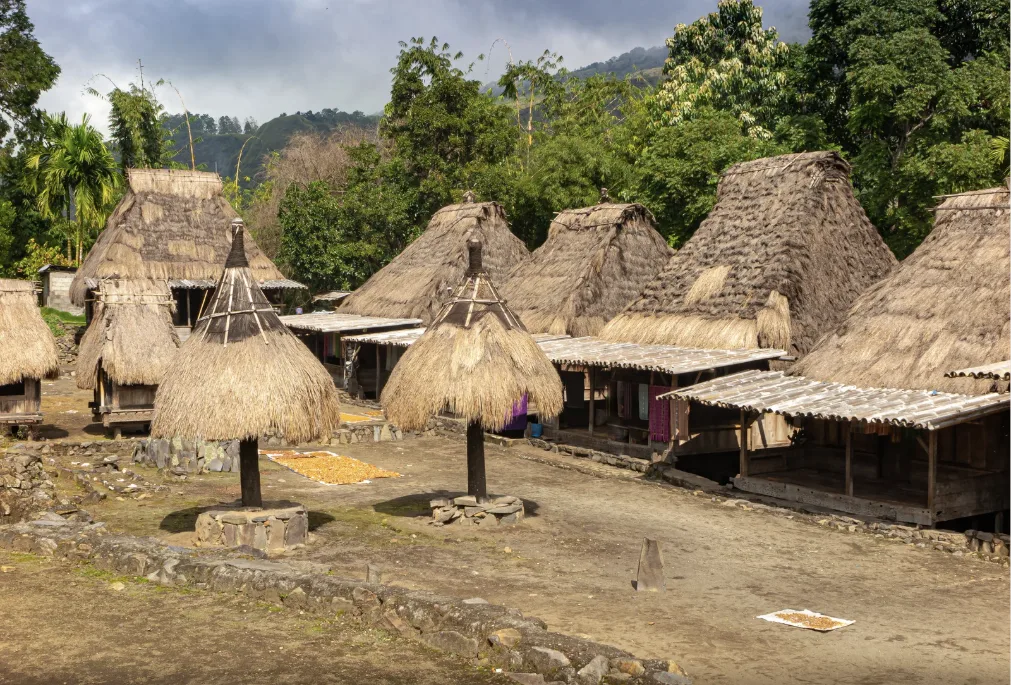
Behind every piece of NTT dress lies a long, painstaking process. Ikat cloth is woven by hand, often by women, through stages of binding and dyeing the threads before weaving, and a single cloth can take weeks or even months. Many of the dyes are natural: morinda root for red, and indigo for blue-black. The skill is handed down from mother to daughter, and today it not only keeps the tradition alive but also provides a livelihood and a cultural draw for visitors to NTT. When you buy a cloth directly from its weaver, you help sustain a skill that's centuries old.
What ties NTT dress together
For all the variety, almost every traditional costume in NTT rests on the same thing: ikat-woven cloth. The weaving is more than clothing; it marks tribe, status, and occasion. Its motifs and colours carry meaning, and some cloths are worn only at specific ceremonies.
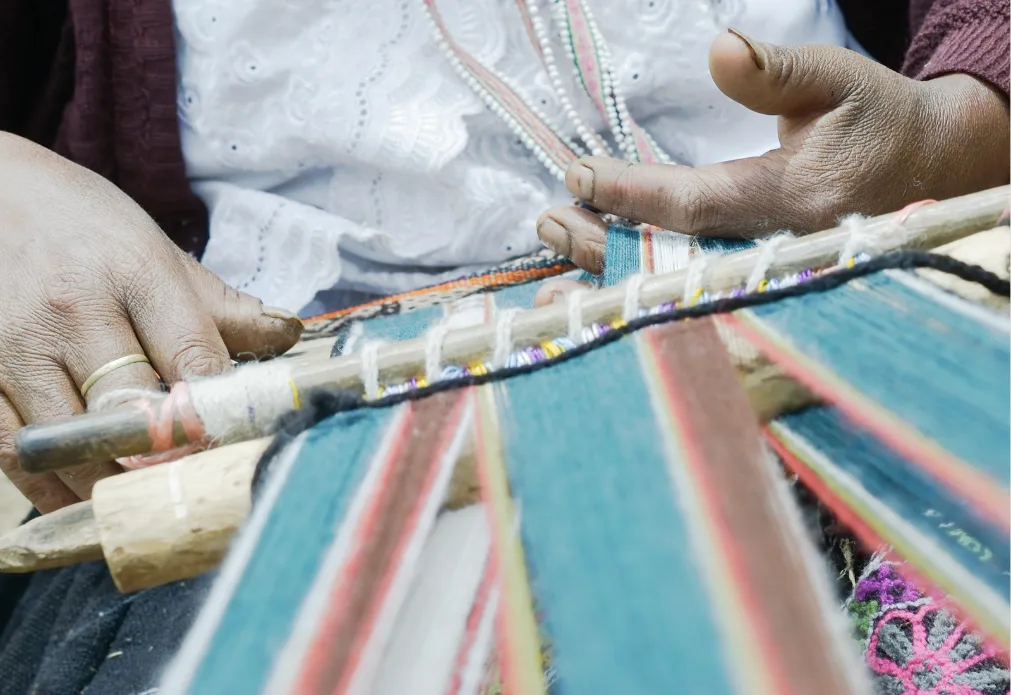
For anyone visiting NTT, recognising its traditional dress is a simple way to appreciate the local culture more deeply, whether you're watching a ceremony, stopping by a weaving village, or choosing a cloth bought straight from its maker.
FAQ
What are the traditional costumes of NTT called?
The best known include Tenun Ikat with the Ti'i Langga hat (Rote), Hinggi (Sumba), Amarasi (Dawan), Tenun Ikat Patola (Lio), and Kain Songke (Manggarai), along with the dress of the Sabu and Helong tribes.
What is the traditional NTT hat called?
It's the Ti'i Langga, a hat from the Rote tribe made of dried lontar palm leaf and shaped like a sombrero.
What do NTT women wear traditionally?
Helong women wear a kebaya or kemben with a gold pending belt and the bula molik headpiece, and Manggarai women wear the black Kain Songke. The base, as elsewhere, is ikat-woven cloth with traditional jewellery.
What is NTT traditional dress made from?
Ikat-woven cloth is the base of nearly all NTT dress. It is hand-woven, and its motifs mark the tribe, status, and ceremonial role of the wearer.
When is traditional NTT dress worn?
Mostly at customary ceremonies, weddings, welcomes for guests, and important cultural events. Some high-value cloths are worn only on particular occasions.