7 Days in Komodo 2026 — Classic Route
At a glance
- Getting there: Fly to Labuan Bajo (LBJ) from Bali (1.5 hours), Jakarta, or Surabaya. Most visitors connect through Bali — it is the quickest and most scenic gateway to the park.
- Best time: April to June and September to November offer the calmest seas and best diving visibility. The dry season means clear skies for island hopping and reliable manta ray encounters.
- Transport: flight from bali (~1.5 hours direct, IDR 700,000–1,600,000)
7 days in Komodo, paced for first-timers but with enough off-script moments to feel like yours. This itinerary threads the park's big-three attractions—dragon trekking, Padar's ridgelines, Pink Beach's blush sand—with quieter reefs and sunrise viewpoints most day-trippers miss. You'll split time between a liveaboard base and Labuan Bajo town, mixing structured guided experiences with room to linger where the light or the manta rays decide to stay.
Day 1 — Arrival & Labuan Bajo warmup
Fly into Labuan Bajo (LBJ) from Bali—roughly 1.5 hours direct, around IDR 700,000–1,600,000 depending on airline and how far ahead you book. If you're connecting from Jakarta or Surabaya, Bali is the quickest gateway; flights are efficient and the airport hub is reliable.
Once you land, your lodge will likely arrange ground transfer to town (ask when you book accommodation). Settle into your guesthouse or mid-range hotel—Labuan Bajo town sits on a steep hillside, so choose a location near the harbor if you want walkable evenings. The harbor waterfront has warung clusters serving fresh grilled fish and cold Bintang; spend your first evening here eating local, not chasing tourist menus.
By late afternoon, confirm your liveaboard departure time with your operator (most boats leave early next morning, around 5:30–6:00 am). Pack a light day-bag for tonight—heavy luggage stays in town, locked at your hotel. You'll need waterproof bag, reef shoes, sunhat, and any dive certification cards if you're doing the manta dives.
Day 2 — Padar, Pink Beach & first snorkel
You're boarding your liveaboard at dawn. Boats typically depart Labuan Bajo harbor around 5:30 am, heading southeast toward Padar Island—roughly 45 minutes by speedboat or 2 hours by traditional kapal pinisi sailing cruiser (the slower pace buys you better light, fewer wakes).
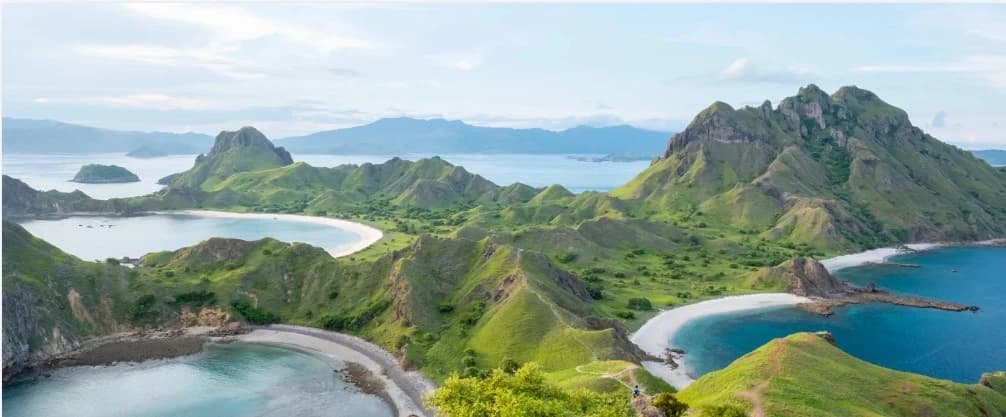
Padar trek (early morning). Land at Padar's eastern beach around 7:00–7:30 am. The ranger-led trek to the main viewpoint takes 30–45 minutes uphill on a well-worn but steep trail. Go slow, start early—the light is soft, the air is cool, and you'll have the ridgeline almost to yourself. The view from the saddle between three beaches (turquoise-pale-seafoam gradient) is the most photographed angle in Komodo, and for reason: the color gradient is almost improbable. Bring 1–2 liters of water; there's no shade midway.
Pink Beach snorkel (late morning). Back to the boat by 9:00 am for a short cruise to Pink Beach on Komodo's northwestern shore. The sand has a rose tint from crushed coral and red algae—subtle in overcast light, vivid in sun. Water is calm in the dry season (April–October), clear enough to spot turtles and reef sharks in the shallows. Snorkel for 45–60 minutes; the reef slopes gradually, so you can nose around in 2–4 meters of water without needing advanced skills. Many liveaboards serve lunch on deck afterward.
Sunset cruise & anchor. By afternoon, your boat repositions to a sheltered anchorage near Rinca Island or Komodo's southern coast, depending on wind and your operator's routing. Most evenings include time on deck with a cold drink, watching the light drain from the ridgelines. Dinner is typically Indonesian-style fish or chicken with rice and sides—expect simple, abundant, and fresh. Sleep comes early; the cabin is modest but steady once the boat finds its rhythm.
Day 3 — Komodo dragon trek & manta snorkel
Rinca dragon trek (early morning). Your boat anchors near Rinca Island's ranger station. Guides meet you around 7:00 am for a 2–3 hour trek through grassland and dry forest. Rinca is smaller and less crowded than Komodo Island proper, but dragon density is similar—you'll almost certainly see 2–4 dragons resting or hunting. The trek is moderate (mostly flat, some rocky sections); closed hiking shoes are mandatory. Bring water, a hat, and binoculars if you have them—the guides spot movement fast, but details matter.
Rangers carry long wooden poles, not for threat but to guide a dragon away if one blocks your path (very rare). They speak basic English or Indonesian; ask questions about dragon behavior, nesting, hunting strategy. The animals are as indifferent to you as stones—they're conserving energy in the heat.
Manta Point snorkel or dive (late morning). If conditions allow, your boat heads to Manta Point on Komodo's east side. This is a current-exposed site, so it's weather-dependent—dry season (April–October and September–November shoulder) offers the calmest windows. Manta rays gather here to feed on plankton blooms, especially during tidal shifts. Snorkelers enter the water and drift with the current while guides scan the blue ahead. If a manta appears, it's a gentle giant gliding 3–5 meters below—electric, humbling, nothing like the anxiety the name stirs.
If conditions are too rough, your operator will pivot to an alternate reef site—Batu Bolong or Gili Laba—where you'll see schooling jacks, reef sharks, and color-saturated coral without the current exposure.
Return to the boat by early afternoon. Most liveaboards anchor near Padar or Rinca again for a second night. Dinner repeats a similar rhythm: fish, rice, fresh sides. Deck time stretches longer as the novelty of floating serenity sinks in.
Day 4 — Gili Laba & undersea return
Gili Laba snorkel or dive. A small rocky island north of Rinca, Gili Laba is ringed by shallow reefs perfect for both snorkelers and divers. Visibility in dry season often exceeds 20 meters. The reef is healthy—hard and soft corals, rays, groupers, the full tropical-fish spectrum. Snorkel 45–90 minutes depending on your interest and your operator's schedule.
Return cruise to Labuan Bajo. By mid-afternoon, your boat heads back northwest toward Labuan Bajo—usually a 2–3 hour cruise depending on your anchorage. The journey mirrors the journey out: if you're on a sailing kapal pinisi, the return sail is often slower and more meditative than the outbound dash.
Arrive in Labuan Bajo harbor by 4:00–5:00 pm. Transition back to your guesthouse, shower off the salt, and rest. Your legs will feel the trekking—stairs feel long.
Day 5 — Labuan Bajo town & overland exploration
No boat today. This is your chance to explore Labuan Bajo's hinterland and absorb the town's rhythm at your own pace.
Morning: Town & harbor walk. Start at the fish market (Pasar Ikan) near the harbor, open early morning. Watch fishermen sort the overnight catch—snapper, mackerel, grouper, squid. The energy is purposeful and local. Grab fresh fruit at a nearby warung (rambutan, mangosteen, starfruit depending on season).
Midday: Lembah Hijau viewpoint or local lunch. Drive or ojek to Lembah Hijau (Green Valley), a hilltop viewpoint overlooking Labuan Bajo harbor and the archipelago beyond. The view is expansive on clear days; the air cools slightly at altitude. Eat lunch at a warung in the village—simple plates of nasi goreng or gado-gado, cheap and satisfying. Chat with the owner if they speak English—many do, and you'll hear stories about the town's fishing history and the national park's early days.
Late afternoon: Sunset & harbor-front dinner. Return to the harbor area as light softens. Choose a warung or a slightly more formal restaurant—Scallywags, Bajo Bar, Blah Blah or Blahs are popular, but don't skip the simple warungs along the waterfront either. Fish grilled over charcoal, cold Bintang, the sound of the bay cooling. Sleep early; your body is still adjusting to the sea schedule.
Day 6 — Manta or Pink Beach day-trip option, or rest & departure prep
By day six, you've logged the classic route—dragons, Padar, Pink Beach, reefs. You have two choices:
Option A: Bonus day-trip. If you have energy and conditions align, book a half-day or full-day boat trip from Labuan Bajo. Manta Point snorkel, a second dive at Gili Laba, or a repeat of Pink Beach if conditions were marginal on day 2. Operators in town can arrange morning or afternoon departures. Cost ranges from IDR 750k–1.5 million depending on boat type and destination.
Option B: Rest & explore. Stay in town. Visit the local diving shop (Aquamarine Diving, Flores Diving Center) to chat with instructors and see if any open-water classes are running—sometimes a casual conversation sparks a plan for future trips. Wander the hillside neighborhoods; Labuan Bajo is small enough to get lost productively. Eat at different warungs, drink coffee at a local café, watch the afternoon catch come in.
Pack and arrange your airport transfer for the following morning by early evening.
Day 7 — Departure
Fly out of Labuan Bajo early or midday, depending on your ticket. Most international travelers connect through Bali (1.5 hours back to Denpasar), which offers onward flights to Jakarta, Jakarta to Singapore, Singapore onward. If you're flying out of Jakarta or Surabaya directly, the itinerary reverses, but most visitors enjoy an extra night in Bali to decompress and shower off the last of the sea salt.
Use your airport transfer time to reflect—dragons are surprisingly gentle, the manta rays were unhurried, Padar's light is impossible to photograph fairly. Komodo isn't loud or crowded or demanding. It simply exists, vast and quiet, waiting for the tide to shift.
Practical notes for your planning
When to come. April–October (dry season) offers calm seas, 15–25 meter visibility, and the most reliable manta encounters. September–November shoulder months are quieter, still warm, with occasional rough crossings. November–March brings lush greens and occasional manta blooms, but sea state is unpredictable and some boats reduce operations.
Liveaboard vs. day-trips. This itinerary assumes a 3-day liveaboard (days 2–4), which threads the major sites efficiently and lets you wake at sunrise without commuting. If you prefer land-based, you can run day trips from Labuan Bajo, but you'll lose the dawn moments and the slow drift of evening light. Liveaboards range from basic shared-cabin kapal pinisi (around IDR 2.5–4 million for 3 days) to luxury motor yachts (IDR 8–15 million). Day trips run IDR 900k–2 million per person.
Flights. Book your Bali–Labuan Bajo leg at least 2–4 weeks ahead if you're flexible on dates. Airlines like Batik Air, Garuda, and Lion Air run these routes; prices drop midweek. A return ticket from Bali is typically IDR 1.4–3.2 million depending on season and how early you book.
balilabuan-bajo~1.5 hours direct
IDR 700K–1600KWhat to pack. Reef shoes (mandatory for all treks and snorkels), waterproof bag for electronics, sun protection (hat, sunscreen, rash guard), lightweight long sleeves (sun + dragon ticks), basic medications (seasickness pills if prone, antihistamine, painkillers, any prescriptions). Liveaboards provide towels and basic toiletries; bring your preferred shampoo and any specialized gear (dive computer, underwater camera, binoculars). Clothes can be minimal—shorts, light shirts, one fleece for evening deck time.
Currency & costs. Indonesian Rupiah; ATMs are available in Labuan Bajo town. Budget roughly IDR 100k–200k per day for meals outside your boat (liveaboard food is included), IDR 50k–100k for casual transport, and extras like drinks and tips. Park entry and ranger fees are typically bundled into liveaboard costs (roughly IDR 250k entry + IDR 80k ranger per trek + IDR 100k boat fee per group).
Visas & connectivity. Most Western passport holders can enter Indonesia visa-free for 30 days. SIM cards for local coverage (Telkomsel, Indosat) cost IDR 50k–100k; data packages are cheap. Labuan Bajo has decent 4G; liveaboards often have satellite or boat-owner WiFi (slow but functional).
Tweak the day order to match your interest—manta in Nusa Penida moves with currents, so flexibility pays. Ubud temples reward early arrivals, but Komodo doesn't follow tourist schedules. The dragons rest when they rest; the manta rays come when the plankton blooms. Work around the sea and the light, not the other way around.