We left Labuan Bajo at 5:30am — sun still pinking the sky over Wae Cicu Bay. The speedboat's engine turned over with that particular rumble you learn to recognize: full throttle across open water, the captain reading swells like a map. By 6:15, we'd cleared the channel markers and hit the deeper blue. Around us, the volcanic ridges of Komodo and Rinca rose dark and distant. Padar was still ahead, maybe 45 minutes of spray and salt-worn railings.
At a glance
- Getting there: Fly to Labuan Bajo (LBJ) from Bali (1.5 hours), Jakarta, or Surabaya. Most visitors connect through Bali — it is the quickest and most scenic gateway to the park.
- Best time: April to June and September to November offer the calmest seas and best diving visibility. The dry season means clear skies for island hopping and reliable manta ray encounters.
- Transport: flight from bali (~1.5 hours direct, IDR 700,000–1,600,000)
Most visitors to Padar Island never spend a full day there. The island fits neatly into a Komodo day-trip itinerary — three hours, maybe four if currents cooperate — squeezed between Pink Beach snorkeling and a ranger walk on Rinca. But if you can carve out a morning and early afternoon at Padar alone, the place opens up differently. The light shifts. The viewpoint doesn't crowd. You notice the way the island's three beaches — white sand, black sand, pink-tinged — each face a different swell direction, each hold their own particular quiet.
Padar reveals itself in tides and seasons. April through October, the dry months, bring that crisp visibility and calmer crossings — roughly what we had that morning, glassy swells with only a fringe of chop on the windward side. The waters run electric blue, shallow enough near the shore that you can see rays gliding beneath the surface. November through March reverses the pattern: wetter, choppier, fewer boats, and the island's northern cliffs catch genuine spume. Both seasons have their truth. April to October just makes the entry easier.
The landing beach curves in a gentle crescent, pale sand sloping gradual and forgiving. A ranger station sits just above the tide line — a modest open-air shelter, ranger fees already bundled in most day-trip bookings (roughly Rp 80,000 per person, confirmed when you check in at Labuan Bajo's park office). From there, the trail climbs steadily but not brutally. The path is well-worn volcanic rock, switchbacks marked with painted arrows. Closed shoes are non-negotiable — the stone underfoot will shred sandals and sunburned feet. A sun hat, too. The ridge offers no shelter; the sun reflects off rock and bounces back up from the sea.
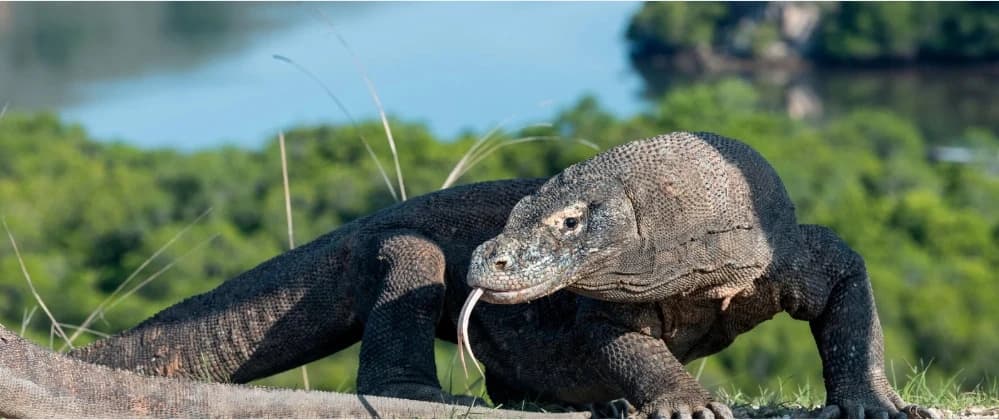
The final push takes about 45 minutes from landing, though pace varies with group size and photo stops. We crested the ridge around 7:15am, well before the crowds. The viewpoint opens suddenly — three beaches falling away in different directions, the water shifting color as depth changed: pale jade near the shore, deepening to cobalt offshore, then that purple-black at the continental shelf where manta rays sometimes hunt. Rinca's spine was visible to the west. Komodo Island itself, where the dragons live, rose dark and jagged to the north. The sky was still clean, no haze yet from the crossing currents that can muddy the view by mid-morning.
We sat longer than the schedule allowed. The thing about a full day at Padar is that you're not chasing light or currents — the light chases you instead. We watched it play across the black-sand beach, watched a patrol boat motor slow beneath the ridge, watched a pod of spinner dolphins break the surface about a kilometer offshore. No ranger narration, no group check-ins, no speedboat throttle in your ears. Just the island's actual silence.
The descent took the same 45 minutes, slower on the knees. By 10am we were back at the crescent beach, where the waters had warmed and the first snorkeling groups were beginning to arrive. If you're doing a full day, this is the moment: water temperature peaks in late morning, visibility can exceed 20 meters, and the reef life at Padar's nearshore zone is as close to untouched as anywhere in the park. The pink sand in the southern beach — a blend of red volcanic debris and crushed coral and manganese oxide — is actually sharper than it photographs. Reef shoes or water booties protect your soles when wading out.
Lunch is the gap most visitors can't bridge on a typical day trip. We ate ashore in Labuan Bajo at a warung before boarding, packed snacks for the ridge, and didn't eat again until late afternoon back at the main dock. A full-day Padar option gives you the chance to bring proper supplies — a dry bag with banana, water, energy bar, and a water-filtration bottle. The boat crew on most tours can arrange something more substantial if you request it 24 hours ahead. It shifts the experience entirely, eating with the island's quiet instead of rushing it.
By 2pm, when the afternoon thermals began building cumulus clouds and the breeze picked up, we were heading back to Labuan Bajo. The return crossing ran a touch rougher — afternoon waters always do — but the boat was nearly empty. Most of Komodo's visitors won't see Padar this way: unhurried, in softer light, with time to notice the texture.
If a day at Padar is on your plan, the Komodo Day Trip covering Padar, Pink Beach, and manta snorkeling pairs well with a morning-focused route. For those wanting more breathing room, the multi-day liveaboards build Padar into days two and three, when the pace settles and the island shows its actual face — not the postcard version, but the one that stays with you.