
Baluran National Park: Africa van Java 2026, Savanna, Wildlife & Beaches
At a glance
- Getting there: Train from Surabaya (~6h). Ferry Ketapang–Gilimanuk (~45min). Flight from Jakarta (~1h45m). No direct flight from Bali. No direct flight from Surabaya.
- Best time: April through November is the dry season with reliable roads and clear skies. Ijen blue fire is visible year-round but the hike is safest and most spectacular May through August. Sukamade turtle nesting peaks September through March.
"Planning a trip to Banyuwangi?" One of the region's most surprising landscapes sits north of the city open grasslands where banteng graze under acacia trees, backed by a dormant volcano and a coastline that runs straight into the Bali Strait. Baluran National Park earns its nickname "Africa van Java" not from marketing spin but from what you'll see the moment you drive in: savanna horizon, scattered herds, and dry-season light that feels nothing like the rice-terrace valleys most people picture when they think of Java.
We're breaking down what makes Baluran worth the drive, when to come for the best wildlife viewing, and how to pair it with the nearby coast at Pantai Bama, a white-sand beach with mangroves, macaques, and coral shallows that most visitors don't realize is part of the same park.
Getting there
- By train: Surabaya to Banyuwangi, about 6h.
- By ferry: Ketapang crossing, about 45min.
- By air: Jakarta to Banyuwangi, about 1h45m.
- From Bali: no direct flight, reach Banyuwangi by ferry crossing instead.
- From Surabaya: no direct flight, reach Banyuwangi by ferry crossing instead.
What makes Baluran different from the rest of Java
35-40 km north of Banyuwangi
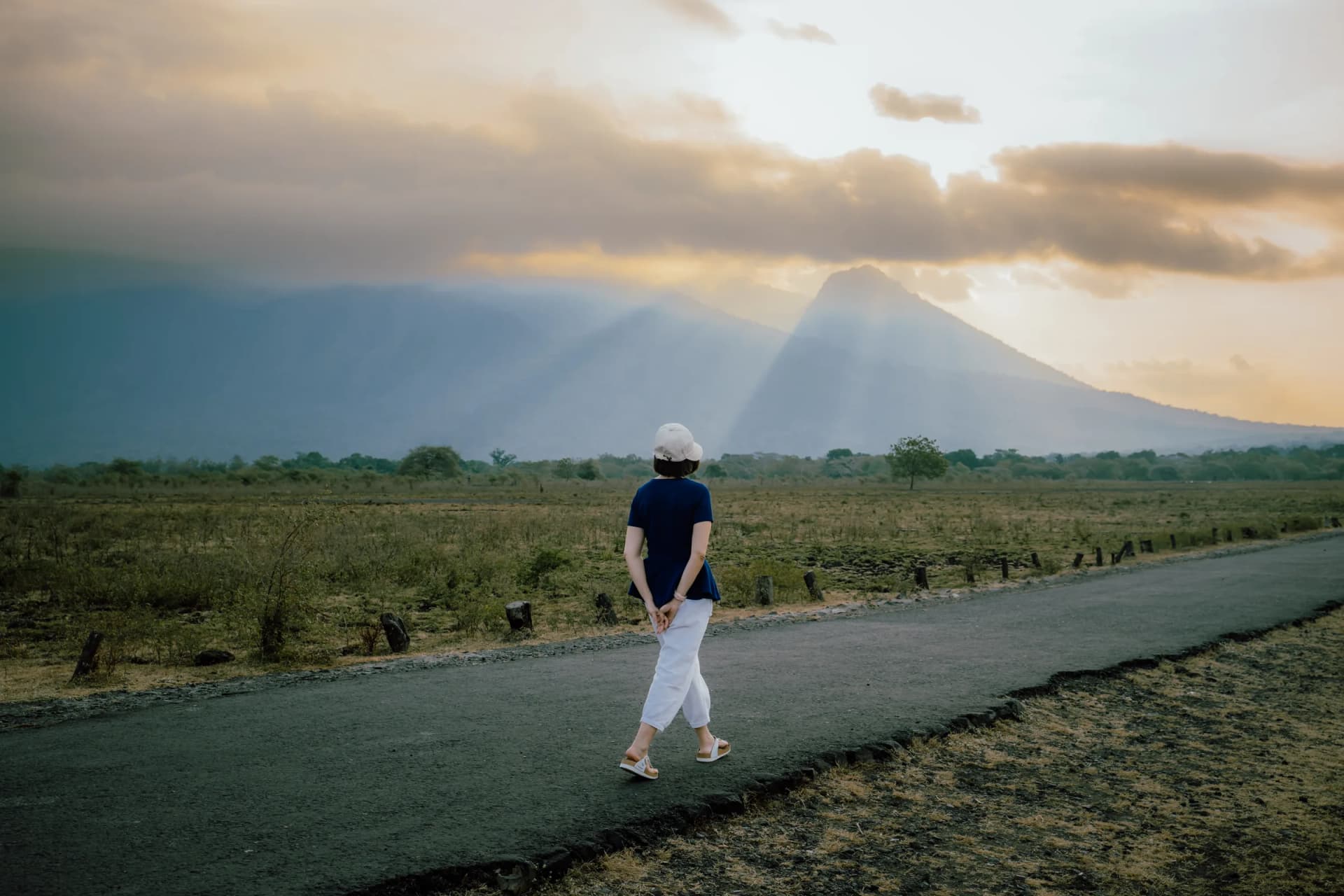
Most of Java's protected areas lean heavily on volcanic peaks and montane forest, think Bromo's caldera or Ijen's sulfur lake. Baluran flips that script. The park covers 25,000 hectares of lowland savanna, thorn forest, and coastal mangrove, shaped by Mount Baluran's rain shadow and the dry winds that blow in from the Bali Strait during the long dry season.
The result: open grasslands that look lifted from East Africa, dotted with acacias and browsed short by banteng Java's wild cattle. You'll also spot rusa deer, wild boar, and if timing aligns, green peafowl stepping through the tall grass near water sources. The park supports several critically endangered species, including Javan leopard, but sightings are vanishingly rare and should never be marketed as a visitor draw, they're reclusive, nocturnal, and their presence is a conservation priority, not a safari checklist item.
The savanna ecosystem here is fragile. Invasive acacia species introduced decades ago have begun choking out native grasslands, and the park management runs controlled burns during the dry season to push back encroachment. If you visit between June and November, you might see blackened patches where fire has cleared invasive growth it looks stark, but it's part of the restoration cycle that keeps the savanna open.
3D2N Safari Camp Banyuwangi: Snorkeling, Savannah & Climb Kawah Ijen
banyuwangi · 3D2N
The only three-day trip that sleeps in a tent, pitched at Paltuding, right at the foot of the Ijen trail. You will do snorkeling in Menjangan & Tabuhan, visit the savannah at Baluran, and Climb Kawab Ijen. Tent and camping kit, the jeep, boats, snorkelling gear, underwater photos, and all meals are included; hotels are not — there are no hotel nights in this one. Maximum 10 guests.
from
$290 USD
Savana Bekol — the park's wildlife heartland
Savana Bekol is the main savanna expanse, where most visitors spend their time. A watchtower rises near the entrance, giving you elevated sightlines over the grasslands and the scattered acacia stands where banteng and deer often graze during early morning and late afternoon. Midday heat sends most animals into shade, so plan your visit for cooler hours.
The watchtower itself is basic, metal steps, a covered platform, binoculars recommended. From the top, you can trace the grassland horizon to Mount Baluran's slopes in the distance, and if you're patient, you'll watch herds shift across the landscape as they move between feeding areas and water sources. The dry season, roughly June through November, concentrates wildlife near the remaining waterholes, making sightings more predictable but also more crowded as animals compete for resources.
Green peafowl are easier to spot than you'd expect. They're large, ground-dwelling birds with iridescent plumage, and they favor the savanna edges where grass meets thorn scrub. Males display during breeding season, fanning tail feathers that catch the light. Monitor lizards patrol the open ground, and macaques occasionally wander out from the forested fringes looking for dropped food or unattended water bottles, secure your belongings and don't feed them.
The park offers guided jeep tours if you want a ranger's perspective on animal behavior and seasonal patterns. Self-driving is permitted on designated routes, but stick to the tracks, grassland restoration depends on minimizing soil compaction outside managed corridors.

Banyuwangi Day Tour: Menjangan Snorkeling & Baluran Savannah
banyuwangi · 1 Day
Sea in the morning, savannah in the afternoon, with pickup from town. Snorkelling at Menjangan and Tabuhan, back to Grand Watu Dodol, then inland to Baluran National Park. GoPro underwater photos, snorkelling gear, a snorkelling guide, per-person insurance, and lunch are included. Drone permits inside the national park are arranged separately. Maximum 10 guests.
from
$106 USD
Pantai Bama — where savanna meets the Bali Strait
Most visitors to Baluran focus on the inland savanna and miss Pantai Bama entirely, but the beach is part of the same park, a white-sand stretch backed by mangroves, with macaques patrolling the forest edge and coral shallows offshore. It's a sharp ecosystem shift from the dry grasslands, and if you've got time after Savana Bekol, the coast is worth the detour.
A mangrove boardwalk runs through the swamp forest behind the beach, letting you walk into the dense root systems where crabs scuttle across the mud and mudskippers dart between tidal pools. The boardwalk is short, maybe twenty minutes end-to-end but it gives you a close look at the nursery habitat that supports juvenile fish and shellfish before they move offshore.
The beach itself is low-key no vendors, no loungers, just sand and shade under the coastal casuarinas. The water is clear enough for snorkeling if you've brought your own gear, and the coral patches near the mangrove outflow attract small reef fish. Macaques frequent the beach in the late afternoon, so keep food packed away and don't leave bags unattended. They're bold, habituated to human presence, and perfectly capable of unzipping daypacks if you give them the chance.
Pantai Bama doesn't see heavy visitor numbers, which means you're more likely to have stretches of shoreline to yourself a rare commodity along Java's north coast. If you're combining Baluran with other Banyuwangi destinations, Bama makes a solid midday cooldown stop before heading back inland.
When to visit and what the seasons change
Baluran's dry season runs roughly June through November, and that's when the park shows its savanna character most clearly. Grass dries to straw-gold, waterholes shrink, and wildlife concentrations peak as animals cluster around the few reliable water sources. Visibility is high, dust rises with every vehicle pass, and the heat by midday can be punishing bring water, sunscreen, and a hat that actually covers your face.
Wet season, December through May brings green grass back to the savanna, but it also disperses the wildlife as water becomes available across the park. You'll see fewer animals in any given spot because they don't need to congregate at waterholes. Roads can turn muddy, and some routes may close temporarily after heavy rain. The upside: the landscape is lush, birdlife is more active, and you'll likely have the park nearly to yourself.
If you're chasing the classic savanna aesthetic, golden grass, blue sky, herds on the horizon, dry season delivers. If you prefer solitude and don't mind fewer wildlife sightings, wet season is your window. Either way, aim for early morning or late afternoon visits. Midday heat drives animals into shade and turns the savanna into a still, empty expanse that's more endurance test than safari.

2-Day Banyuwangi Tour: Djawatan Forest, Baluran & Menjangan
banyuwangi · 2D1N
Two days with no climbing at all. Day one is inland — De Djawatan forest, then the savannah of Baluran, with a night in town. Day two is at sea: snorkelling Menjangan and Tabuhan, rinsing off at Grand Watu Dodol. Every stop is reachable at an easy walking pace, which makes this one work for mixed-age groups. Snorkelling gear, a snorkelling guide, underwater photos, per-person insurance, and all permits are included. Maximum 10 guests.
from
$155 USD
Pairing Baluran with the rest of Banyuwangi
35-40 km north of Banyuwangi
Baluran sits on the northern edge of Banyuwangi regency, which means it pairs naturally with other destinations scattered across the region. To the west and uphill, Kawah Ijen's blue fire and sulfuric crater lake make for a pre-dawn trek most tours leave the city around midnight, hit the crater for sunrise, and return by late morning. That gives you the afternoon to drive north to Baluran if you've got energy left and a flexible schedule.
South of the city along the coast, Pulau Merah a tidal island with surf breaks and sunset views sits in Pesanggaran. It's walkable at low tide and attracts surfers year-round, though the offshore breaks are best during the dry season when swells are consistent. Further into the southwest corner, Alas Purwo National Park and the legendary G-Land surf zone occupy a remote peninsula that requires serious logistical commitment rough roads, long drives, and limited infrastructure. Sukamade Turtle Beach in Meru Betiri National Park is another destination in that direction, but the drive takes several hours on poor roads and turtle nesting season peaks September through March, so timing matters.
Closer to the city, Djawatan Forest offers a short detour towering trembesi trees form a canopy tunnel over old plantation roads, making for atmospheric photo stops. It's easily accessible and quick to visit, making it simple to slot into a day that already includes Baluran or other northern stops.
If you're combining multiple destinations, the Safari Camp Banyuwangi 3D2N itinerary weaves Baluran into a broader Banyuwangi circuit with Ijen, coastal stops, and forest detours. Day-trip options like the Menjangan, Tabuhan & Baluran Day Trip work if you're short on time but want to hit the savanna alongside offshore snorkeling.
What to bring and what to skip
Baluran is a daytime park, no overnight camping is permitted within the core savanna zones, and facilities are minimal. Bring your own water, snacks, and sun protection. The park gate sells basic refreshments, but don't count on it for a full meal.
Binoculars help, especially if you're serious about birdwatching or want to track distant herds from the Savana Bekol watchtower. A telephoto lens or zoom camera gives you better wildlife shots without needing to leave the vehicle, getting out on foot in the savanna isn't permitted outside designated zones, and for good reason. Banteng may look placid, but they're unpredictable if spooked, and wild boar can be aggressive if cornered.
Closed-toe shoes are non-negotiable if you're walking the Pantai Bama boardwalk or exploring any forested edges. The ground is uneven, roots and rocks jut up, and mangrove mud is slippery. Sandals are fine for the beach itself, but not for the trails.
Skip the drone unless you've got explicit park permission, wildlife disturbance is a real issue, and rangers will confiscate unauthorized equipment. Same goes for loud music or vehicle horns, the park is a conservation zone, not a photo safari playground.
FAQ
How much does entry to Baluran National Park cost?
Entry fees are tiered by nationality. Domestic visitors pay IDR 25,000, while foreign visitors pay IDR 150,000. These rates apply to both the savanna and the coastal Pantai Bama areas, one ticket covers the full park.
Can I drive my own vehicle through Baluran?
Yes, self-driving is permitted on designated routes within the park. Stick to the established tracks and don't leave the roads, grassland restoration depends on minimizing off-route disturbance. If you prefer guided context, the park offers jeep tours with rangers who can point out wildlife behavior and seasonal patterns.
When is the best time to see wildlife at Savana Bekol?
Dry season roughly June through November concentrates animals near waterholes as grass dries out and water sources shrink. Early morning and late afternoon offer the best sightings, as midday heat drives most animals into shade. Wet season disperses wildlife across the park, making individual sightings less predictable but the landscape greener.
Is Pantai Bama worth visiting if I'm already going to Savana Bekol?
If you've got time, yes. Pantai Bama is part of the same park but offers a completely different ecosystem white sand, mangroves, coral shallows, and macaques. The mangrove boardwalk is short but gives you close access to the root systems and tidal zones. The beach is quiet, undeveloped, and good for a midday cooldown or snorkel if you've brought gear.
How long should I plan to spend at Baluran?
A half-day covers Savana Bekol and Pantai Bama comfortably if you're driving yourself and visiting during cooler hours. Full-day itineraries make sense if you're combining Baluran with nearby stops like Djawatan Forest or continuing to other Banyuwangi destinations. Most guided day-trip packages pair Baluran with offshore snorkeling or other regional highlights.
Can I camp overnight in the savanna?
No, overnight camping is not permitted in the core savanna zones. The park prioritizes wildlife conservation over visitor accommodation, and facilities inside Baluran are minimal. If you're looking for multi-day stays, base yourself in Banyuwangi city or consider itineraries that include Baluran as a day stop while overnighting elsewhere.