
Labuan Bajo Deep Dive 2026 — A Curator's Guide
At a glance
- Getting there: Fly to Labuan Bajo (LBJ) from Bali (1.5 hours), Jakarta, or Surabaya. Most visitors connect through Bali, it is the quickest and most scenic gateway to Komodo.
- Best time: April to June and September to November offer the calmest seas and best diving visibility. The dry season means clear skies for island hopping and reliable manta ray encounters.
- Transport: flight from bali (~1.5 hours direct, IDR 700,000–1,600,000)
"Planning your first trip to Labuan Bajo? Here's what separates a rushed airport-to-boat-to-hotel sequence from the kind of journey that rewires how you think about Indonesia's eastern edge." Labuan Bajo is not a destination you click through en route to something else it's a threshold. The town itself is modest, a working fishing port where the airport landed less than a decade ago, but it's become the gateway to one of the world's last wildlife strongholds: Komodo National Park, where dragons still rule, manta rays patrol the blue, and pink-sand beaches feel less like postcard fantasy and more like earned discovery.
This guide moves past the obvious. We'll walk you through the rhythms of the region when to come, how to navigate the seas, what to expect from each island, and how to pace a trip so you're not just collecting photo checkmarks but actually feeling the place. We've guided dozens of travelers through these waters. Here's what matters most.
Timing: Read the Sea, Not the Calendar
The Komodo season splits cleanly, and your dates matter more than you'd think.
April to June and September to November are the sweet spots dry season winds push from the south, keeping seas calm and visibility crisp. These windows offer the best odds for manta ray encounters at Manta Point, the clearest water over coral gardens, and stable boat schedules. Park rangers confirm that April-June sees the most predictable conditions: light currents, warm water (28–29°C), and skies that break clear by mid-morning. September-November repeats the pattern, with slightly cooler water and the bonus of fewer crowds mid-week.
If you're flexible, arrive mid-week. Weekends (especially September–November) pull boats from Bali and Surabaya Manta Point gets crowded, and rangers adjust schedules to manage group flow. Tuesdays through Thursdays offer the same conditions with quieter reefs.
July and August are dry but windy. Seas chop up, boat trips can get bumpy, and diving visibility drops to 15–20 meters on rough days. If you're committed to these months, book a liveaboard the extra stability and ability to reach sheltered lee-side reefs make the difference.
December through February (wet season) sees rain, swells, and unpredictable crossings. Day trips often cancel; multi-day liveaboards can still operate, anchoring in protected bays. The upside: manta rays concentrate in these months (plankton blooms), you'll find fewer tourists, and the landscape turns vivid green. Book with operators experienced in rough-water seamanship, this isn't the season to pinch pennies on guide quality.
March is transition weather can flip day to day. Hotels and boat operators tend to offer discounts, but delays are common.
Getting There: The Flight Gateway
Most travelers fly into Labuan Bajo through Bali. The route is straightforward: Bali (DPS) to Labuan Bajo (LBJ), 1.5 hours direct, multiple daily departures. Flights from Bali run IDR 700,000–1,600,000 depending on carrier and timing (Batik Air, Garuda, and Lion Air compete on this route; prices drop midweek).
If you're arriving from Jakarta or Surabaya, you'll connect through Bali or fly direct with longer routing budget 3.5–4 hours from Jakarta, 2–3 hours from Surabaya, with fares in the IDR 1,200,000–2,800,000 and IDR 900,000–2,000,000 ranges respectively.
balilabuan-bajo~1.5 hours direct
IDR 700K–1600KThe airport sits 8 km south of town. Taxis to the waterfront (where most hotels and boat tours start) cost 80,000–120,000 IDR and take 15–20 minutes depending on traffic. Some hotels offer airport pickups for guests ask when you book.
Build in a night or two in Labuan Bajo proper if you arrive on a midday flight. The town's waterfront has warung meals, simple hotels, and enough wandering to adjust your body clock. Tourist infrastructure is still ramshackle by Bali standards ATMs exist, but not everywhere; SIM cards for data are cheap and essential (see practical info below).
The Waters: Where You'll Actually Spend Your Time
Once you're in a boat, the landscape defines itself. Labuan Bajo sits at the edge of the Flores Sea, where continental shelves drop sharply, currents run cold and nutrient-rich, and wildlife congregates in predictable zones.
Komodo Island (the island, not just the park) is the big spectacle. Rinca Island, just south, is where most ranger treks happen it's smaller and more intimate than Komodo proper, with more reliable dragon sightings per hour. Expect a 45–60 minute trek with a ranger (mandatory), crossing savanna like grassland and ravines where dragons rest in the heat. Water, sun protection, and closed shoes are non-negotiable. The park requires Rp 250,000–450,000 entry (weekday/weekend rates), plus Rp 80,000 for a ranger fee per group, and boat fees around Rp 100,000 per group to reach the dock.
Padar Island, the postcard location, sits between Komodo and Rinca. The trek is 45–90 minutes depending on your pace, ascending to a ridge viewpoint where three beaches pink, white, and black sand meet below you. The colors are real; the hike is steep and exposed. Avoid midday heat. Tour boats include park entry and ranger in their package pricing.
Pink Beach (Pantai Merah) is a snorkel stop, not a landing for extended time. The pink color comes from crushed coral and shell, visible in the shallow water and sand. Visibility here averages 15–20 meters in calm months; reefs are delicate, so responsible snorkeling (no sunscreen in the water, no touching coral) is the rule. Most day trips include 45–60 minutes here; liveaboards use it as a secondary stop.
Manta Point is the dive site that defines the region's prestige. It's not a structure it's a bathymetric funnel where cold currents upwell plankton, and manta rays (wingspan 4–5 meters) gather to feed. Encounters are not guaranteed, but April–June and September–November see them on 70–80% of dives. Dive shops in town handle certification; if you're already certified, book a private boat with a dive guide. Non-divers can sometimes snorkel Manta Point on calmer days, though the experience is far less immersive dives get you eye-to-eye; snorkeling is glance-from-above.
Kalong Island (Bat Island) is a sunset-cruise destination, 30 km northwest of town. At dusk, fruit bats depart the island in waves thousands of them silhouetted against a reddening sky. The cruise leaves around 3–4 pm, returns by 8 pm, and typically includes a seafood dinner on deck. It's theatrical, slightly kitschy, and somehow still arresting. Prices run IDR 300,000–600,000 per person depending on boat class and meal quality.

Sailing Slow, Chasing Sunsets: 6-Hour Classic Wooden Boat Escape
labuan-bajo · 1 Day
Leave the rush behind and step aboard our classic wooden boat for a 6-hour afternoon escape. Drift through the Komodo archipelago at a relaxed pace, perfectly balancing vibrant ocean exploration with the breathtaking natural spectacle of Kalong Island at twilight.
from
$32 USD
The Flores Sea itself carries swells that build in certain seasons; boat operators know the daily window for each site. A good boat captain checks conditions at dawn and adjusts the itinerary it's not stubbornness, it's seamanship.
Multi-Day Options: Speed vs. Stillness
Day trips from town are the default for budget travelers and those with limited time. A standard 2-day, 1-night itinerary hits Rinca trek + Padar hike + Pink Beach snorkel, leaving early (5–6 am), returning by evening. Speedboats are faster and cheaper than liveaboards typically IDR 1,500,000–2,500,000 per person for a small group. The downside: you're racing between islands, eating lunch on a moving boat, and sleeping in a budget hotel on shore. The upside: you see the highlights, and it's accessible to travelers on tight schedules.
Liveaboards 2 to 4 days sleeping aboard change the rhythm entirely. You wake at anchor, dive or snorkel before breakfast, drift through the day, and reach new sites by evening. The anchor stays down unless weather forces a move. Meals are cooked on board, social time flows naturally, and your body adjusts to the boat's slow tempo. Prices vary wildly: budget liveaboards (shared cabins, basic meals, group tours) run USD 400–700 per person for 3 days; mid-range boats (private cabins, better food, smaller groups) run USD 800–1,500; luxury galas with chefs, spacious decks, and crew attention cost USD 2,000+.
The difference between a speedboat day trip and a liveaboard isn't just pace it's the ability to snorkel twice daily, to wake at Manta Point if conditions align, and to absorb the place rather than consume it.
Land-Based Extensions: Flores Beyond the Park
Labuan Bajo is the arrival point, but Flores itself extends east. If you have 5+ days, consider pairing a 2–3 day liveaboard with overland time.
Flores interior (Ruteng, Bajawa, Ngada region) sits 5–8 hours east by road. The landscape shifts from coastal rock to volcanic highlands; villages preserve weaving traditions, and agriculture shifts to coffee and clove. It's slow travel rough roads, basic accommodations but culturally distinct from the coastal tourism belt.
Ende, at the eastern end of Flores, is 12–14 hours overland from Labuan Bajo (or a scenic liveaboard sailing option). The town is the transit hub to Sumba and the islands beyond; few tourists linger there, but it's the gateway to less-visited east.
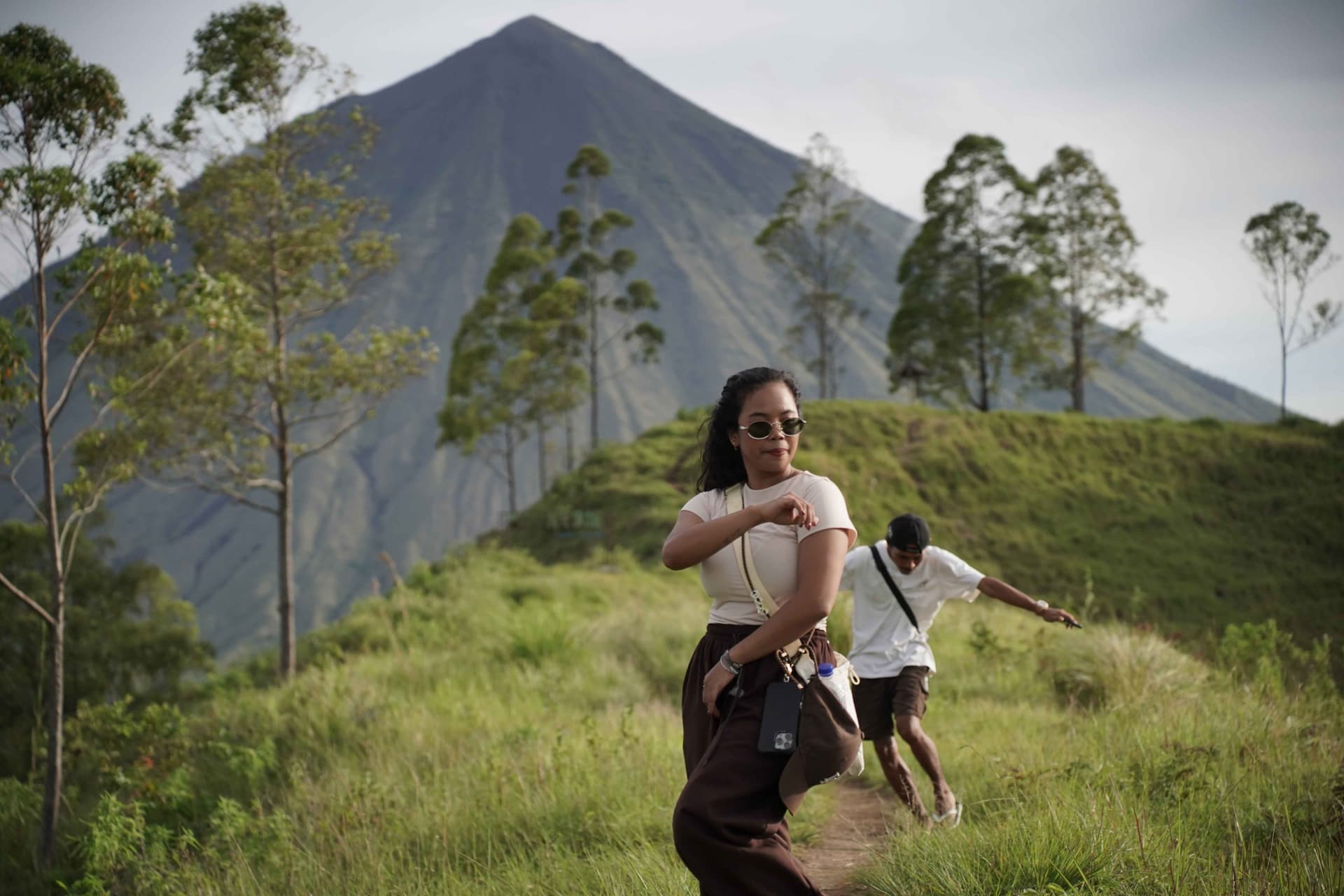
Epic Trans-Flores Overland Tour: Labuan Bajo to Ende Expedition
flores · 6D5N
The complete Trans-Flores overland journey from Labuan Bajo to Ende. Six days through spider-web rice paddies, traditional villages, volcanic hot springs, and the iconic Kelimutu crater lakes. For travelers who want the full Flores experience.
from
$452 USD
Most first-time visitors skip the interior and pair Komodo (3–4 days) with beach time in Lombok or a return to Bali. If you're the type who hires a driver and wants no fixed itinerary, Flores rewards that curiosity, but plan 8+ days minimum.
Practical Essentials
Currency: Indonesian Rupiah (IDR). ATMs exist in town near the waterfront; bring USD or EUR as backup. Boat operators and remote island purchases assume cash (Rp). Credit cards work in mid-range restaurants and hotels, but not everywhere.
SIM and data: Buy a local SIM (Telkomsel, Indosat, or XL) at the airport or any convenience store. Data is reliable in town (4G coverage), spotty on boats and islands. A phone plan with 10–20 GB for a week costs around 150,000 IDR and lasts throughout your trip.
Visa: If you're a passport holder from a major country (USA, EU, UK, Japan, etc.), you can buy a visa-on-arrival (VOA) for USD 25 at the airport or apply for an e-visa online (takes 3 days). Indonesian visas don't require Labuan Bajo specifically they're national. Do the paperwork before you fly if possible.
Gear: Bring reef-safe sunscreen (no oxybenzone or octinoxate), a rash guard for diving, closed shoes for island treks, and a quick-dry towel. The sun here is unforgiving burn happens fast. Sunglasses with UV 400 and a wide-brimmed hat are worth the baggage space.
Water: Bottled water is available everywhere. Tap water in hotels is typically fine for brushing teeth; drink bottled to be safe.
Money matters: Guides, boat crew, and hotel staff in modest establishments rely on tourism income. Tips are not mandatory but customary 10–15% in restaurants, IDR 50,000–100,000 per person per day for boat guides and trek rangers if service is good.
The Pace That Works
The biggest mistake we see is overloading. Travelers arrive with 4–5 days and try to hit Komodo, Rinca, Padar, manta dives, bat island, and a side trip to Flores interior. By day three, they're exhausted and snapping at crew.
A sustainable 4–5 day trip looks like this: Arrive day one, acclimatize in town. Days two and three, a liveaboard hits Rinca, Padar, and Manta Point with time to linger. Day four, rest in town or a half-day snorkel trip. Day five, depart or extend if logistics allow.
If you have 6–7 days, add Flores overland (Bajawa or Ruteng) for a full shift in scenery. If you have 3 days, a speedboat day trip plus one night rest in town is honest and achievable. More than one week here means you're ready to slow further liveaboards of 5–7 days, or mixing maritime time with genuine overland exploration of Flores.
Whatever pace you choose, the seas of Labuan Bajo reward patience. A liveaboard rocking gently at anchor, or a moment alone on Padar's ridge watching the sun redden these moments don't rush.