
New Komodo Diving Rules 2026: What Divers Need to Know Before Booking
At a glance
- Getting there: Fly to Labuan Bajo (LBJ) from Bali (1.5 hours), Jakarta, or Surabaya. Most visitors connect through Bali, it is the quickest and most scenic gateway to the park.
- Best time: April to June and September to November offer the calmest seas and best diving visibility. The dry season means clear skies for island hopping and reliable manta ray encounters.
- Transport: flight from bali (~1.5 hours direct, IDR 700,000–1,600,000)
"Planning your first dive in Komodo?" The waters here have always been electric—strong currents, prolific manta encounters, pristine reefs but the ruleset protecting them has shifted. New Komodo diving rules for 2026 tighten where you can go, who can guide you, and how quickly you're allowed to move through the park. These aren't bureaucratic inconveniences; they're the park authority's answer to surge in diver volume over the past three years. Before you book a liveaboard or day trip to Komodo, you need to understand what's changed, how it affects your dive itinerary, and which operators have already adapted their routes to stay compliant.
What Changed: The 2026 Rule Framework
The Komodo National Park Authority introduced a revised diving protocol in January 2026, effective immediately for all new bookings. The three pillars are diver capacity caps per dive site, mandatory ranger escort for certain zones, and seasonal rotation closures for reef recovery.
Diver capacity per site. Previously, dive operators could rotate freely between 15+ named sites, stacking groups at popular reefs like Castle Rock or Batu Baros. As of 2026, peak-season (April–June, September–November) dives cap at 8–12 divers per site per day, depending on current strength and coral sensitivity. Castle Rock—one of Komodo's most famous drift dives, where mantas and sharks converge in predictable patterns now allows only two dive groups daily, with 90-minute minimum intervals between entries.
Ranger escort mandate. Dives at Manta Point, the Cauldron, and the Seraya Wall now require a park ranger on deck not just briefing divers before entry, but actively monitoring descent and ascent. This isn't new in principle, but the 2026 update specifies ranger qualifications (advanced rescue certification, advanced nitrox training, or equivalent) and sets a minimum 1:8 ranger-to-diver ratio for deeper dives (30–40m). Small operators running 4-6 diver groups may need to hire additional rangers or consolidate groups, which delays departure times and sometimes reshuffles itineraries.
Seasonal site rotation. Three high-traffic reef zones Batu Baros, Sebayur, and parts of the Seraya Wall are now on rotating 6-week closure windows during peak season. The first closure window runs April 15–May 31, 2026; the second, September 1–October 15. This means dive operators planning April–May trips need alternative sites locked in by February, and September departures need confirmation by late August.
Why These Rules Matter for Your Booking
Timing gets stricter. The old model: you'd book a 4-day liveaboard, show up in Labuan Bajo, and the operator would customize your route based on weather and manta sightings that week. The new model demands pre trip site confirmation operators now need to submit their intended dive site rotation to the park authority 14 days before departure. If your operator hasn't locked in their April itinerary by early April, you're looking at late changes or rerouting.
This affects your decision calculus. If you're flexible on dates, booking a 3D2N liveaboard in late May or early June locks you into fewer crowds and zero rotation-closure conflicts. If April is your only window, expect operators to bank on Castle Rock only once, and manta encounters (weather and current dependent, not guaranteed) get rarer because Manta Point may have queue limits.
Group dynamics shift. Smaller groups 6–8 divers instead of 12–16 mean more personalized attention from guides and better in water photography because you're not jostling for position on the reef. It also means liveaboard pricing may creep up slightly, because operators recover the same fixed costs (boat fuel, crew, ranger salary) across fewer paying divers.
Ranger proximity changes the vibe. A park ranger on deck during your dive isn't surveillance, they're an extra safety net and a live-link to updated current forecasts. Many rangers are trained dive instructors and can answer real-time questions about coral species or fish behavior. It's an advantage, though some divers experience it as a minor constraint on depth flexibility or unplanned detours.
The New Komodo Diving Rules 2026 in Detail
Capacity tiers by site and season:
Peak season (April–June, September–November):
- Castle Rock: 2 groups max, 8 divers per group, 90-min intervals
- Manta Point: 3 groups, 8 divers per group, 60-min intervals, ranger escort mandatory
- Batu Baros: Closed April 15–May 31; open June–August, limit 2 groups daily
- Sebayur: Closed September 1–October 15; available remainder of year, limit 3 groups daily
- Seraya Wall: Partial closure (upper 25m open; 30–40m limit 1 group daily), ranger escort mandatory for deeper dives
- Lesser-known sites (Gililawa, Gili Meno, Komodo Beach): No cap, no ranger mandate, full access
Shoulder and wet seasons (November–March, August):
- All sites open except seasonal rotations
- Capacity limits relax to 12–16 divers per site per day
- Ranger escort optional (not mandatory) except at Manta Point
Ranger fees. Park authority revised the fee schedule in 2026:
- Standard ranger escort (any site requiring it): IDR 500,000 (~USD 33) per dive per group, split among divers
- Advanced ranger (nitrox guide or specialized briefing): IDR 750,000 (~USD 50) per dive per group
- Most liveaboards absorb this into the tour price; day-trip operators usually add it as a line item at checkout
Pre-booking site confirmation. Operators must submit their planned route 14 days before departure. This is internal paperwork, but it affects you: confirm with your operator before paying a deposit that your preferred sites (e.g., Castle Rock and Manta Point) are in that week's rotation. If they're not, you can renegotiate the itinerary or shift your travel dates.
Certification and entry requirements haven't changed. You still need an open-water cert minimum for most sites, advanced open-water for Castle Rock and the Cauldron, and nitrox cert if you want to dive deeper than 30m on extended bottom times. The 2026 rules don't add new cert mandates, they just tighten logistics around where your existing certs can take you.
How Operators Are Adapting
Experienced Komodo liveaboard operators have already reorganized their rotations. The larger outfits running boats year-round with 20+ departures annually—built multi-itinerary packages. Your booking confirmation now includes a designated dive site rotation sheet showing which sites are on which days, locked by the operator at booking.
The Akassa Liveaboard Komodo trips, for instance, have split their April–June itinerary into two variants: a "Castle Rock focus" loop (4 dives at Castle Rock, 8 alternative-site dives) and a "manta-rich" loop (heavy Manta Point rotation, 2 Castle Rock slots). You pick which variant suits your interests when you book. Smaller day-trip operators near Labuan Bajo are consolidating groups partnering with competitors on peak days to meet ranger ratios, or pivoting to lesser known sites (Gililawa, Gili Meno) that have no cap and no ranger escort requirement.
The net effect: booking windows are tighter. A 4D3N liveaboard departing May 10 might be full by late March, because operators lock their rotation by mid-April and limited spots remain once groups are consolidated to meet diver caps. If you're planning a Komodo dive trip, aim to book 6–8 weeks ahead, not 2–3 weeks.
Choosing Your Dive Style Under the New Rules
Liveaboard vs day trip. A 3D2N or 4D3N liveaboard gives you four to five dives over consecutive days, with the same guides and a predictable site rotation. Liveaboards have absorbed the ranger costs and diver cap logistics into their pricing, so you don't see line-item complexity at checkout. The Komodo Diving Liveaboard is a 4D3N option that starts around USD 500, with 4 guided dives, ranger escort, and meals included.

Komodo Diving Liveaboard
komodo · 4D3N
Multi-day diving liveaboard through Komodo's world-class dive sites: Batu Bolong, Crystal Rock, Manta Alley, and Castle Rock. Strong currents bring pelagics, mantas, and reef sharks. For certified divers.
from
$500 USD
Day trips from Labuan Bajo are cheaper upfront (USD 145–200 per trip) but demand more flexibility. You're joining an operator's pre-set group, and if your preferred site has reached its daily cap or is in rotation closure, you're offered an alternative. The Komodo Day Trip: Padar, Pink Beach, Komodo & Manta Point combines snorkeling and one dive, so it suits divers wanting to sample Komodo's reefs without committing to a liveaboard.
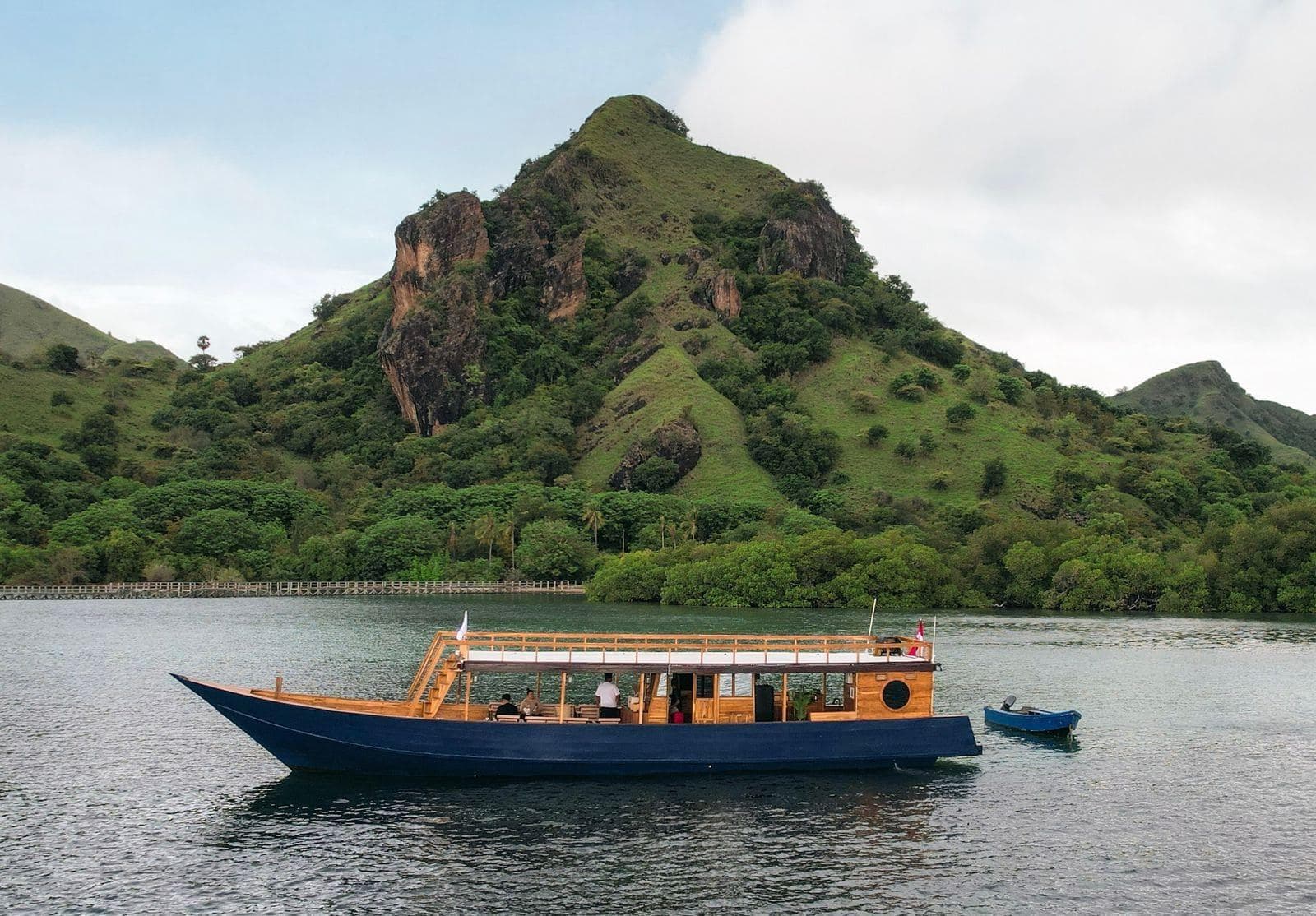
Komodo Day Trip: Padar, Pink Beach & Dragons in 1 Day
komodo · 1 Day · 4.8
Experience Padar Island, Pink Beach, Komodo dragons, snorkeling, and Kalong Island—all in one unforgettable day from Labuan Bajo
from
$142 USD
Depth and current strength. Castle Rock is a drift dive in 20–30m water, famous for strong currents that concentrate mantas and sharks. The new 2-group-per-day cap makes it less reliably bookable, but more spacious when you do dive it. If you're an advanced diver chasing drift dives and big pelagics, locking Castle Rock into your itinerary early (via a committed liveaboard booking) is your best bet.
Manta Point 30–35m, shallower approach, mantas often in 15–20m range—is more forgiving for depth but now strictly ranger escorted. The ranger presence actually helps here: they'll brief you on current direction, optimal entry time, and where mantas are most active that day.
The Seraya Wall (Seraya Lesser's eastern face) is a wall dive offering both shallow and deep options. The new rules cap deep dives (30–40m) to one group daily, but the shallow section (10–25m) is uncapped. If you're intermediate certified, you can dive Seraya's shallow corals without queuing.
Manta encounter probability. Mantas move with currents and plankton blooms, not park policy. The new diver caps don't increase manta frequency—but they may improve your encounter quality. Fewer divers per site means less reef disturbance, which can prolong manta visits. If mantas are your primary goal, book a May–June or October–November liveaboard; these months have the strongest currents and most reliable sightings.
Logistics: Getting to Komodo & Timing Your Dive
Most international divers fly into Labuan Bajo via Bali. The flight from Bali to Labuan Bajo (LBJ) is 1.5 hours direct, with tickets ranging IDR 700,000–1,600,000 (USD 45–105). If you're coming from Jakarta, expect a 3.5–4 hour journey (typically connecting through Bali), costing IDR 1,200,000–2,800,000. Direct flights from Surabaya run 2–3 hours and cost IDR 900,000–2,000,000.
baliLabuan Bajo~1.5 hours direct
IDR 700K–1600KBest time to dive. Dry season (April–June, September–November) offers calm seas, 20–30m visibility, and the most manta sightings. But as noted, these months carry diver-cap constraints. Shoulder months (March, August, December) are less crowded, visibility is still solid (15–25m), and rotation closures don't apply trade off is slightly rougher seas and fewer manta guarantees.
Wet season (January–February) is quieter and cheaper (liveaboard prices drop ~20%), with 10–15m visibility, occasional strong currents, and a chance of trip reschedules due to weather. If you have a flexible schedule and don't mind tighter visibility, wet-season diving is an underrated window.
Arrival rhythm. Most liveaboards depart Labuan Bajo early morning (5:30–6:30am), so plan to arrive the previous day. Overnight in Labuan Bajo, dine at a warung, get your gear checked, and sleep. Many dive shops offer free gear rental checks and nitrox fills the evening before departure.
New Komodo Diving Rules 2026: What You Should Ask Your Operator
Before paying a deposit, confirm these details with your tour operator:
-
Which dive sites are locked into my itinerary? Ask for the signed site-rotation sheet. If your preferred site isn't listed, ask if they can swap it in or offer an alternative.
-
Are ranger fees included in the quoted price? Most liveaboards include them; some day-trip operators add them separately at checkout (IDR 500,000 per group).
-
What's the diver group size? If the operator promises "small groups," confirm the max—is it 6, 8, or 10 divers?
-
What happens if a site is at capacity or closed? Ask for their policy on site swaps or itinerary changes due to rotation closures.
-
Do you offer nitrox? If you're certified, nitrox extends bottom time and can be crucial for multi-dive days or deeper sites.
-
Is manta encounter guaranteed? No operator should promise mantas—they're wildlife, not amenities. But a good operator will tell you historical encounter rates for your dates (e.g., "May has 70% manta encounter rate at Manta Point based on 2024–2025 data").
FAQ
Do the new Komodo diving rules apply to snorkelers?
No. Snorkeling caps and ranger requirements apply to scuba dives only. Snorkelers at Manta Point or Pink Beach follow standard park protocols (life jacket, briefing, guide proximity), but the 2026 diver cap and ranger escort rules don't constrain snorkel groups. Day trips combining snorkeling and one dive like the Komodo Day Trip: Padar, Pink Beach, Komodo & Manta Point are unaffected by diver caps on the scuba portion.
Can I dive independently, or do I need a guide?
All dives in Komodo National Park require a guide. This isn't new in 2026, it's a longstanding park rule. You cannot do self-guided diving. Guides are either employed by the dive operator or contracted independently; either way, your operator handles the booking.
If I book now (early 2026), will I get grandfathered under old rules?
No. The 2026 rules apply to all new bookings effective January 1, 2026. If you booked a trip before January 1 with a liveaboard operator, your itinerary was grandfathered. Any booking made after January 1 follows the new capacity and ranger protocols.
What if I'm certified for deep dives but the new rules limit my depth at certain sites?
Sites like the Seraya Wall and the Cauldron have depth tiers shallow sections unrestricted, deep sections (30–40m) capped to one group per day. You can dive the shallow tier without queuing, or request the operator book you into the sole deep group if space exists. Nitrox certification helps here, as it extends your bottom time and may give you more flexibility within the single deep-dive slot.
Are there penalty fees if I cancel after booking?
This depends on your operator. Most Indahnesia-listed operators offer 50% refund if you cancel 30+ days out, no refund within 14 days. The new 2026 rules don't change cancellation policies, but confirm with your operator some are stricter given the pre-booked site rotation commitment.