
"Planning your Komodo trip? Padar Island is the one place nearly every visitor wants to see — and for good reason. The three ridgelines that crown it, the blush-colored sand beach cradled below, the electric-blue straits fanning out in every direction. But Padar isn't just a photo op. It's a tidal puzzle, a weather-dependent summit, and a geography lesson in how the Indonesian archipelago actually works. Here's what you need to know before you go — when to time it, where it sits in the park, and how to actually get there without wasting a day on logistics.
jakartakomodo~3.5-4 hours connecting
IDR 1200K–2800Kbalikomodo~1.5 hours direct
IDR 700K–1600Ksurabayakomodo~2-3 hours direct or connecting
IDR 900K–2000KWhere Padar Island Sits (and Why That Matters)
At a glance
- Getting there: Fly to Labuan Bajo (LBJ) from Bali (1.5 hours), Jakarta, or Surabaya. Most visitors connect through Bali — it is the quickest and most scenic gateway to the park.
- Best time: April to June and September to November offer the calmest seas and best diving visibility. The dry season means clear skies for island hopping and reliable manta ray encounters.
- Transport: flight from bali (~1.5 hours direct, IDR 700,000–1,600,000)
Padar Island anchors the southwestern cluster of Komodo National Park, roughly equidistant from Labuan Bajo (the mainland port, ~40 km northeast) and the larger Komodo and Rinca islands (10–15 km east). It's part of the smaller-island constellation — Padar, Gili Laba, Gili Motang — that forms a natural stepping stone between the town and the big-dragon destinations. This geography is crucial: Padar isn't a full-day expedition like a Komodo dragon trek. Most visitors reach it as part of a day-hop itinerary (Padar + Pink Beach + Komodo / Rinca in one morning-to-afternoon sweep) or as a sunrise stop on a multi-day liveaboard.
The island itself spans roughly 4 kilometers across at its widest — small enough that you can island-hop around it by boat in an hour, large enough that its three main ridgelines create genuine topographic drama. The island is uninhabited and protected as national park land. No warung, no facilities, no fresh water. Ranger presence varies by season and park staffing — you may see them, or you may explore the trails solo (though park rules technically call for ranger supervision on longer treks).
The Summit Trek: Fitness, Time, and Timing
The main attraction is the ridgeline hike to the viewpoint — a scrambling trek that takes 45 minutes to 1.5 hours depending on fitness and how many photo stops you make. The route climbs steeply from the beach trailhead, crosses scrub woodland and exposed rock, and crests at roughly 370 meters above sea level. The final 50 meters involve hand-over-foot boulder-scrambling — nothing roped or technical, but it demands secure footing and comfort with height.
Fitness threshold: Most travelers aged 10 to 70 complete it. Kids under 6 typically don't make the summit (nor do they need to — the lower beach and mid-ridge viewpoints offer plenty). Heavy hikers might find the scramble harder on the way down than up — bring trekking poles if your knees protest descent. The exposure is real but brief — only the final ridge narrowing creates genuine vertigo, and the rock is stable. Wear closed-toe hiking shoes, not sandals.
Time budget: Allow 2.5–3 hours total (30 minutes boat ride from Labuan Bajo or your anchorage + 45 min–1.5 hour summit + 45 min descent + 30 min return boat). This is why Padar slots into day-trip itineraries, not overland days. Most tour operators bundle it with snorkeling stops or Pink Beach time to fill the rest of a half-day or full morning.
The weather wildcard: Padar's exposed ridgeline means wind and visibility dictate the experience. Dry season mornings (May–June, September–October) typically offer wind-still conditions until 10 or 11 am — grab that window. By midday, thermal wind kicks up from the Flores Sea, and visibility can shrink. Rain arrives fast in the wet season (November–March) and turns the upper ridge into a slip hazard. Shoulder months (April, November) can be unpredictable — you might get flat-calm or you might get clouds rolling in within an hour. This is why early starts (5:30–6:30 am boat departures) are non-negotiable if you want the classic sharp-shadow panorama photos.
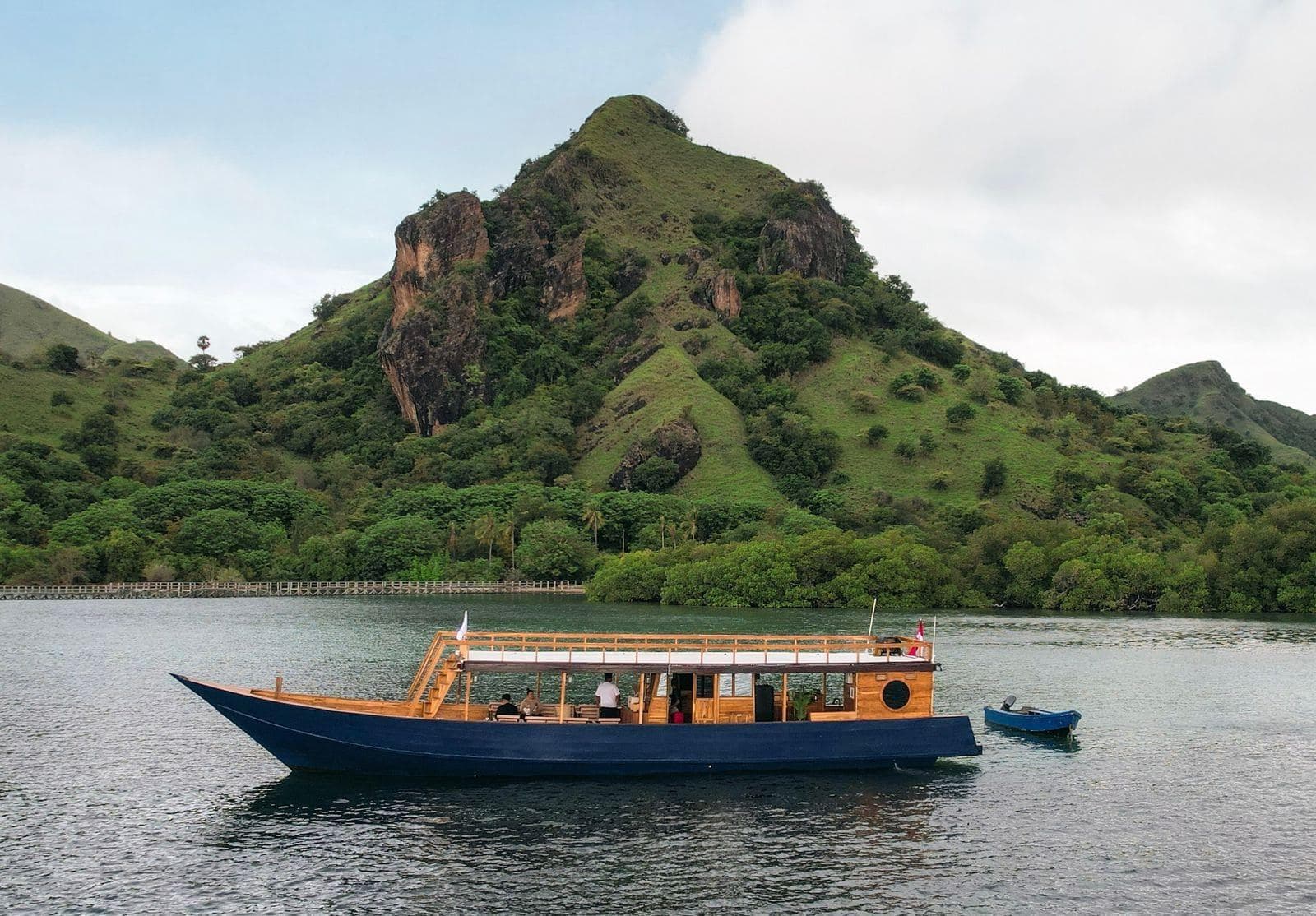
Komodo Day Trip: Padar, Pink Beach & Dragons in 1 Day
komodo · 1 Day · 4.8
Experience Padar Island, Pink Beach, Komodo dragons, snorkeling, and Kalong Island—all in one unforgettable day from Labuan Bajo
from
$142 USD
The Three Viewpoints (and How They Stack)
The summit (370m) is the main draw — the perspective where you see all three ridgelines, the two bays below (one turquoise, one deeper blue), and the Flores Sea horizon. Sunrise to 9 am delivers the most dramatic light. By noon, the sun is high and flattens the color. Afternoon visits work, but you lose that soft-gold rim light on the ridges.
The middle ridge (roughly 200–250m) offers a shortened trek (20–30 minutes up) if the summit feels too exposed or if weather is rolling in. You still get the vista of the three ridges and the bays below — nearly as photogenic, less scrambling.
The beach and lower trail — if the hike isn't in your plan, the beach itself (white and pink-tinted sand, depending on light and tide) is worth 20 minutes of wandering. Tide-dependent — low tide opens flats for wading and shell-collecting; high tide narrows it.
Tides, Currents, and Why Your Boat Captain Cares
Padar's geography creates strong tidal flows — the narrow straits between Padar, Gili Motang, and Rinca channel incoming and outgoing tides into fast currents. This matters for boat routing. Your captain will time the approach to catch slack-water or favorable current, avoiding the chaotic turbulence that can occur during tide transitions. If you're on a day trip, you're likely leaving Labuan Bajo at a precise time partly because of tide windows — not bureaucracy, but physics.
If you're snorkeling nearby (Pink Beach, Manta Point, Gili Motang's house reef), currents become even more critical. Manta encounters are most reliable during incoming tides when plankton surges are strongest. Pink Beach snorkeling works better during slack-water or gentle outflow — strong currents can sweep you away from the reef or churn up silt. Most tour operators know these windows intimately. Multi-day liveaboards often anchor overnight specifically to catch the right tide window the next morning.
When to Come: Seasons Translated to Padar Conditions
Dry season proper (May–June, September–October):
- Sea state: Calm to moderate. Predictable wind patterns. Visibility 20–35m if you snorkel nearby.
- Summit conditions: Clear, wind rising by mid-morning. Early starts essential.
- Park operations: Full ranger staffing, regular boat schedules, no surprise closures.
- Crowds: High, especially June and September.
- Dive/snorkel quality: Excellent — plankton present, manta rays active, coral visibility sharp.
- Best for: Sunrise summit, guaranteed boat access, snorkeling confidence.
Shoulder months (April, October–November):
- Sea state: Increasingly variable. April might stay calm; November introduces chop.
- Summit conditions: April calm, November increasingly breezy.
- Park operations: Normal. Fewer tourists.
- Crowds: Moderate.
- Dive/snorkel quality: Still strong, but plankton starting to decline (November) or build (April).
- Best for: Budget-conscious travelers, smaller group vibes, manta-seeking in late October/early November (tail-end plankton bloom).
Wet season (November–March):
- Sea state: Rough. Crossings 40+ minutes can be uncomfortable. Chop makes summiting less pleasant (more wind exposure, lower visibility).
- Summit conditions: Variable cloud, occasional rain, wind.
- Park operations: Some days closed due to sea state. Ranger presence thins.
- Crowds: Very low.
- Dive/snorkel quality: Murky (fresh water runoff, silt), but mantas can appear in November.
- Best for: Travelers seeking isolation and budget prices. NOT recommended for summit-chasing or water sports.
The April–October overlap: This six-month window is when 80% of Padar visitors come. If you're flexible, May–June or September–October pick the best ratio of calm seas, crowds below hotel-saturation level, and predictable weather.
How to Get There: Three Routes
Route 1 — Day trip from Labuan Bajo (Most common)
Boats depart around 5:30–7:00 am from Labuan Bajo port, reaching Padar in 30–40 minutes depending on sea state and exact landing point. You'll likely combine it with Pink Beach (15 min boat ride east), a reef snorkel or Manta Point stop (another 20–30 min), and perhaps a Komodo or Rinca Island dragon trek (30–50 min from Padar). Total trip duration: 8–10 hours. Cost: Day-trip packages run ~IDR 1,500,000–2,500,000 per person (roughly USD 90–160) depending on group size and operator — prices are lower for larger groups and higher for private boats.
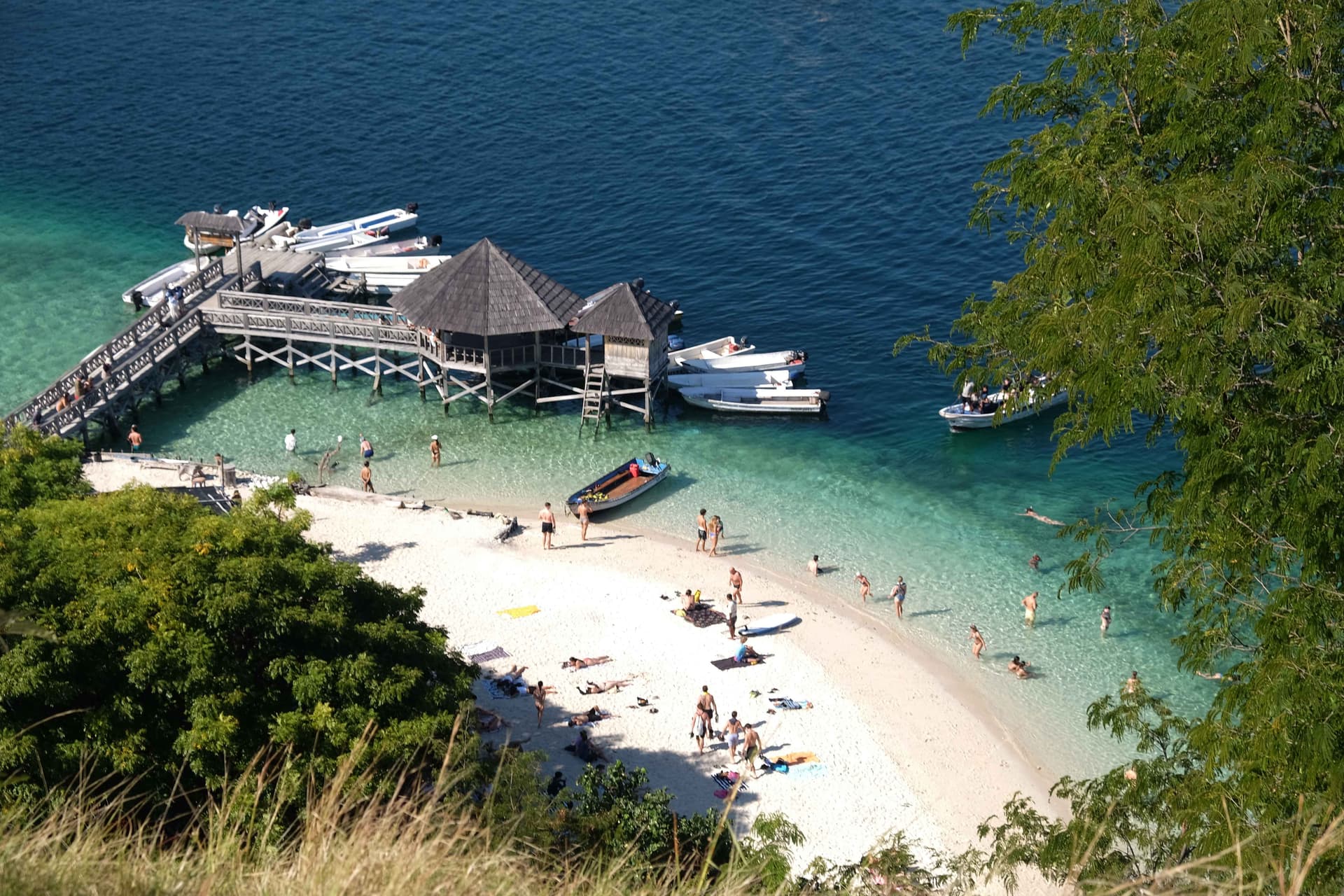
Manta Point Snorkeling Day Trip
komodo · 1 Day
Dedicated half-day trip to Manta Point in Komodo National Park. Focused on manta ray encounters with extended snorkel time at the cleaning station. Best April-October.
from
$77 USD
Route 2 — Liveaboard anchorage stop (Premium / flexible)
Multi-day liveaboard trips (kapal pinisi or speedboat) often anchor near Padar on night one or two, giving you a sunrise summit opportunity the next morning without the pre-dawn departure rush. You get the hike in calm conditions, then move to the next snorkel site by late morning. Liveaboards also have the flexibility to pause if conditions are poor, rather than racing against a day-trip schedule. Cost: Liveaboards range from USD 200–500 per person for 3 days, with Padar included as a routing stop, not a premium add-on.
Route 3 — Extended day trip with guide (Rare / special request)
Some operators offer private-boat arrangements that anchor you at Padar longer, allowing a more thorough exploration of the island (lower trails, the back beaches, more time between ridgeline visits). This typically costs 2–3x a standard day-trip rate, but it suits couples or small groups wanting flexibility. Arrange with your operator in advance.
What to Bring (and Leave Behind)
Essentials:
- Closed-toe hiking shoes with ankle support (not sneakers, not sandals — the rock is sharp and unstable)
- Sun protection: wide-brimmed hat, sunscreen SPF 50+, UV rash guard if snorkeling
- 1.5–2 liters of water per person (no water source on the island; bring your own)
- Light layers or windbreaker (the ridge is exposed; wind chill is real even in dry season)
- Dry bag for camera/phone
- Snorkel gear (if you've brought your own; most day trips provide rental masks and fins for ~IDR 100k)
Leave behind:
- Heavy backpacks (day pack only — you'll regret weight on the scramble)
- Loose sandals or flip-flops (will be lost on the descent or in boat transitions)
- Expensive jewelry or loose coins (strong current risk during beach transfer)
Park Fees and Logistics
Entry fees (as of 2024):
- Park entry: ~IDR 150,000–250,000 depending on nationality (Indonesian citizens pay lower rate; foreign adults typically pay the higher bracket).
- Ranger fee: ~IDR 80,000 if trekking with a guide (optional for day trips, required for longer explorations).
- Boat landing fee: ~IDR 100,000 per group (typically folded into your day-trip package).
Most tour operators bundle these into the quoted price — confirm before booking that fees are included. Private boat arrangements sometimes charge these separately.
Park rules you'll encounter:
- Trails are open sunrise to sunset. Bring a headlamp if you're an early riser (pre-dawn boat departures mean you might hit the trailhead before first light).
- Camping is prohibited.
- No motorized water toys (jet skis, etc.).
- Trash: pack out everything — the park has no bins, and you're responsible for your waste.
- Reef protection: sunscreen with oxybenzone or octinoxate is banned in the park (use reef-safe formulas).
- Dragons and wildlife: do not approach. Keep 5 meters distance if you encounter them on trails.
The Photo Logistics (Honest Talk)
Yes, the sunrise photo from Padar's summit is iconic and gorgeous. Yes, you can get it on a day trip if you leave by 5:30 am and hit the trailhead by 6:30 am. But "iconic" also means 50–150 other people might have the same plan. Expect company, especially in June and September. If you hate crowds, come in April or November and accept that conditions might be choppier. If you want solitude, come in the wet season, accept that visibility might be compromised, and start your trek before dawn (bring that headlamp).
The three-ridgeline symmetry is real and photogenic from the summit. The colors shift with light angle — golden-hour (sunrise and 90 minutes before sunset) are strongest. Midday light flattens the color and creates harsh shadows. Afternoon and evening light work if clouds cooperate. All three ridgelines are visible from the summit, though the nearest two frame the view most dominantly.
Getting the Most Out of Your Visit
If time is tight (half-day): Arrive by 6:30 am, summit by 8:30 am (before wind and crowds peak), boat back by noon. Cost efficiency: bundled day trip.
If you have flexibility (full day or multi-day): Layer Padar with snorkeling (Pink Beach, Gili Motang, or Manta Point) and choose a liveaboard or extended day trip to anchor longer. The summit visit becomes part of a larger immersion, not a logistics race.
If you're combining multiple islands: Padar + Rinca dragon trek + Pink Beach snorkel is the classic trio (10–12 hours, best for June–October). Padar + Komodo dragon trek is possible but requires careful timing (separate islands, longer boat time). Most operators prefer Rinca for day trips because it's closer to Padar.
If manta rays are your priority: Visit late October through November (plankton bloom window) or ask operators about March–April conditional encounters. Pair with a dedicated snorkel operator who tracks current and manta sightings daily.
When your dates firm up, the day-trip and liveaboard options on this page handle the logistics — they know the tides, the weather windows, and the route sequence that makes the most of your time.