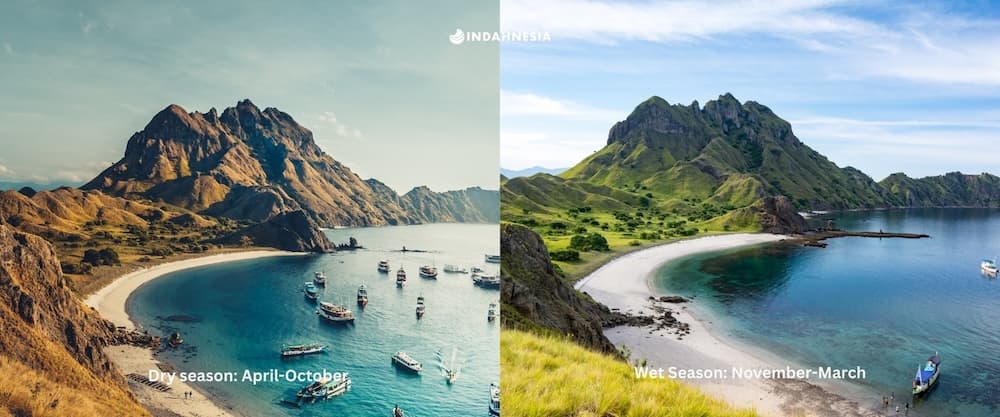
"Planning your Komodo trip? These are the most 19 things to know before traveling to Labuan Bajo—from when to come and what to pack, to how tours work and how to stay connected at sea."
1. Pick your season with intention
Dry months (roughly April–October) bring reliably clear skies, calmer seas, and that crisp visibility you want for Padar’s ridgelines and coral color. Shoulder months can be perfect if you prefer lighter crowds and flexible routes, while the wet season (November–March) may deliver richer greens and, in some southern sites, excellent manta encounters—but also choppier crossings and occasional trip tweaks. Build slack into your plan, especially if you’re connecting flights or adding overland days. Whatever month you choose, early starts and tide-aware itineraries make the biggest difference.
2. Book boat trips early (and match trip style)
Lock in your route and cabin style as soon as dates are firm. Day trips by speedboat hit highlights fast—Padar, Pink Beach, manta/snorkel stops—ideal if you’re time-poor. 2–4 Days liveaboards slow the pace so you can wake at viewpoints, stargaze on deck, and repeat favorite reefs. Families and photographers often prefer private or semi-private options to control timing and avoid crowds. Confirm pick-up times, inclusions (meals, gear, park fees), and realistic durations between stops. Popular weekends and holidays sell out quickly—book before you fly.
3. You must see dragons with a ranger
On Komodo or Rinca, guided treks are mandatory. Rangers brief you on safety, distances, and behavior—follow instructions, keep a respectful gap, and never separate from the group. Closed shoes are essential; trails can be dusty, rocky, or slick after rain. Choose short, medium, or long loops based on heat and your schedule. Bring water and keep cameras ready but steady; sudden movements can stress wildlife. Remember: sightings are in the wild, not a zoo. Your guide sets the pace and lookout points to maximize chances while minimizing impact
4. Understand fees & what’s included
Komodo National Park has multiple fee components that can vary by day, site, activity, and season—and some are payable on top of your tour price. Ask for a clear, itemized breakdown covering park entry, ranger/trekking, snorkeling/diving, holiday/weekend surcharges, and drone or camera permits if applicable. Confirm the day before sailing, since policies and collections can change. Bring enough cash in small notes in case card facilities or signal fail at gates. Align expectations with your operator so there are no surprises at the pier or onboard.
5. Sea currents are real—choose sites for your level
Komodo’s magic comes with moving water. Many reefs are affected by tides and channels that can create strong or shifting currents. Be honest about your swimming or diving experience so your operator can pick suitable sites and timing. Use provided flotation if unsure, listen to the briefing, and drift rather than fight the flow. Stick close to your guide’s line, never chase mantas or turtles, and surface only as instructed. Photographers: clip gear securely, streamline your setup, and accept that some sites are better enjoyed with your eyes than a lens.
**6. **Stay Connected in Labuan Bajo (SIM/eSIM & Wi-Fi)
Signal is generally strong in town and around the marina, but patchy at sea. To keep maps and messages working when you return near shore, buy a local SIM or eSIM and preload offline maps for the park. Onboard Wi-Fi, if offered, typically piggybacks on mobile networks and can drop during crossings, so cache essential documents (vouchers, IDs, insurance) in your phone. Bring a power bank and short cable; sun and constant photo/video use drain batteries fast. If traveling as a pair, consider two different networks for redundancy.
7. Smart packing beats heavy luggage
Tropical weather and boat life reward light, functional gear. Pack reef-safe sunscreen, a wide-brim hat, quick-dry layers, and closed shoes for Padar or Rinca. Add sandals for decks, a dry bag for cameras/phones, and a thin wind layer for evening crossings. Sunglasses with a strap, microfiber towel, and reusable water bottle are small but mighty. Bring essential meds (motion sickness, antihistamines, any prescriptions) since availability offshore is limited. Keep valuables minimal; salt and spray are unforgiving. A compact daypack keeps hands free during climbs and dinghy transfers.
8. Cash still matters
While hotels and many cafés in Labuan Bajo accept cards, smaller shops, local warungs, and some activity points remain cash-first. ATMs are available in town but can run low on busy weekends. Please check the ATM list and all of bank available in Labuan Bajo. Carry a mix of small denominations for tips, snacks, village fees, and last-minute boat provisions. Confirm with your operator whether park fees or dock charges are settled in cash that morning. If you use cards, keep a backup in case of network hiccups. Stash emergency cash in a dry pouch to survive splashes and rain bursts.
9. Drones & permit
If you plan to fly, research regulations well in advance. Drone activity inside Komodo National Park generally requires permits and sometimes additional fees, with restrictions near wildlife and crowded viewpoints. Unpermitted flights can result in fines or confiscation. Below is an updated drone regulation in Komodo National park:
- Valid for one day only: You must choose the exact flight date (previously valid for one trip).
- Fine = 5× permit value: Flying without a permit or on a different date than shown on the permit incurs a fine of five times the permit fee.
- Penalty is a fine (not file deletion): Violations are fined as above.
- One permit = one pilot + one drone.
There are 2 ways of submitting the SIMAKSI:
- Personal applications: Must include a drone pilot certificate.
- Guest applications: Can be submitted via an agency with a request letter; no pilot certificate required, but the agency is responsible for the guest.
Plan your aerials around safety, wind, and privacy—launch and land from approved areas only, and avoid prop wash near boats or people. Bring spare batteries (protected from heat), ND filters for sunrise/sunset, and a landing pad if you expect sand. When in doubt, ask your operator to confirm the latest rules.
10. Respect the reef & wildlife
Komodo’s ecosystems are fragile. Do not touch, stand on, or kick coral; maintain neutral buoyancy and give marine life space. Never feed animals—on land or underwater. Keep a respectful distance from dragons, mantas, turtles, and deer, and let your guide manage encounters. Choose reef-safe sunscreen (zinc oxide/titanium dioxide), avoid single-use plastics, and pack out your trash. On trails, stick to marked paths to reduce erosion. In the water, secure fin straps and camera cords so they don’t snag the reef as you swim.
11. Sunrise & sunset plan
For Padar, the best light is dawn or late afternoon, when shadows sculpt the bays and temps are kinder. Aim to start the climb 30–45 minutes before sunrise/sunset to reach the main saddle without rushing. Carry water, a small headlamp for predawn steps, and wear closed shoes. After sunrise, explore a bit along the ridge for fresh angles away from the main crowd. For sunset, consider Kelor, Bukit Cinta, Bukit Sylvia, or Amelia for land-based views. Build buffer time for boat transfers; currents and winds can shift schedules.
12. Health & comfort at sea
If you’re prone to motion sickness, take medication 30–60 minutes before departure and avoid heavy meals. Hydrate regularly, especially after hikes and snorkels, and seek shade to manage heat. Long-sleeve UPF tops, a neck buff, and lip balm prevent sun and wind burn. Rinse off salt to keep skin comfortable. Keep electronics cool and dry; store them in a padded dry bag when not shooting. Let your crew know about any health concerns early—they can adjust timing, shade setups, and hydration reminders throughout the day.
13. Getting in & around
Labuan Bajo’s Komodo Airport (LBJ) connects to major Indonesian hubs, with short flight times from Bali and straightforward arrivals. If you’re planning a same-day sail, choose early arrivals, but remember weather can affect boats; it’s safer to sleep in town first and depart fresh the next morning.
The airport is close to town; most hotels and operators can arrange transfers. In town, you’ll move between harbor, hotel, and cafés quickly by car, ojek, or on foot depending on your location. For pre- or post-trip land visits (Rangko, Batu Cermin), schedule transport the day before. If you’re catching an evening flight after a boat day, allow extra time for gear rinse-downs and traffic at the pier.
Expect ojeks (motorbikes), local taxis with agreed fares, occasional app-rides (Grab available), and hotel shuttles. For late arrivals, pre-arrange a pick-up to avoid waiting. Many properties can coordinate round-trips to the harbor for embarkation and disembarkation. If traveling with gear, confirm trunk space or request a larger car. Keep small cash ready for tips and short hops. Traffic is generally light, but pier areas can bottleneck around mass departures, so pad transfer times on popular weekends or holidays.
14. Add land time before/after sailing
Sailing covers the icons, but Flores’ interior adds texture. With a few hours, try Batu Cermin for limestone chambers or Rangko Cave for a blue-pool swim. With 2–3 days, go deeper: Wae Rebo for a cultural overnight in conical houses, or Bajawa/Ende for Bena megalithic villages at Bajawa, hot springs, and tri-colored crater lakes Kelimutu at Ende. Land detours pair well with late flights or buffer days when sea conditions are uncertain. They also spread crowds and make itineraries more resilient if weather reshuffles your sailing schedule.
15. Work with local trusted operators
Choose local operators that publish clear itineraries, safety standards, and realistic travel times between stops. A good operator briefs on tides, currents, and wildlife etiquette—and tells you when conditions require Plan B. Verify inclusions (meals, water, snorkeling gear, park and ranger fees, towel, insurance) and cabin or seat assignments before paying. Ask about guide-to-guest ratios, emergency comms, and first-aid readiness. Transparency reduces surprises, improves comfort, and keeps expectations aligned, which is crucial during peak season when timing windows are tight.
16. Power & plugs
Indonesia uses 230V/50Hz with Type C/F sockets. Bring a compact universal adapter and a 10,000–20,000 mAh power bank for long photo days and drone charging. Salt air and heat can stress electronics, so keep chargers and batteries in dry pouches and out of direct sun. A short cable is practical on deck; a longer one helps in cabins with awkward outlets. If you carry cameras, consider a multi-port USB charger to handle batteries, action cams, lights, and phones from a single wall socket at night.
17. Save key emergency numbers
When traveling around Labuan Bajo and Komodo National Park, it’s smart to save key emergency hotlines before you sail. Mobile signal can be patchy at sea, so keep these contacts stored in your phone and written down offline. From local hospitals and police to rescue services, fire, and maritime agencies, these numbers cover the most important services you may need during your trip.
| Labuan Bajo Service | Phone Number |
|---|---|
| POLRES (Local Police Dept) | |
| PLN (Electricity) | [123](tel:123) |
| UGD Puskesmas (Clinic ER) | [(0385) 41114](tel:+6238541114) |
| BASARNAS (Search & Rescue) | |
| DAMKAR (Fire Dept) | |
| KSOP (Harbor Master) | |
| RS Siloam (Hospital) | [0385-2381-911](tel:+623852381911) |
| RSUD (Public Hospital) | |
| LANAL (Naval Base) | |
| BTNK (Komodo Nat'l Park) | |
| BPOLBF (Tourism Authority) | |
| KORAMIL (Military District) | |
| GAHAWISRI (Travel Agent Community) | |
| Bajo Maritim Indonesia |
FAQ
How many days do I need?
Minimum 3 days (one islands, one land, one buffer). Add 2–3 more for Wae Rebo or Kelimutu.
Do I need to be a diver?
No. The top hits—Padar, Pink Beach, turtles, mantas, caves—are fantastic for non-divers.
Can I rely on mobile signal?
In town, mostly yes. Offshore, expect dropouts—use offline maps and keep a power bank.
What should I wear for dragon hikes?
Closed shoes, light clothes, hat, and bring water. Follow your ranger’s guidance.
How Indahnesia Tour can help
- **Up-to-date fees & permits: **We’ll advise you on current park charges and take care of paperwork where possible.
- **Right boat, right season: **Whether you want peak mantas or powder-blue horizons, we’ll match routes to conditions and your experience level.
- Connectivity tips: We’ll point you to reliable SIM/eSIM options in town and ensure your crew carries offline charts and working radios.
Plan It With Indahnesia Tour
Tell us your dates, group size, comfort level, and what you want more of—quiet reefs, kid-friendly bays, sunrise ridges, or low-key land days. We’ll time tides, trails, and crowd patterns so your trip feels unrushed and yours.
Prefer luxury? We’ll place you on a modern yacht at off-peak hours. Want value? We’ll line up smart share-trips with the best timing. Either way—more view, less queue.