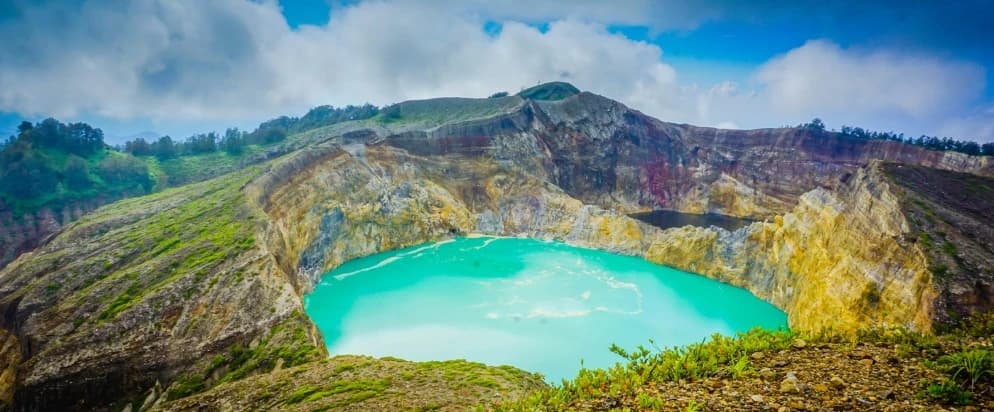
We left Ende at 4:15am, the sky still black, air cool and thin at this altitude, our guide Budi passing around a thermos of sweet coffee as the minivan wound upward through forest. By 5:45am we were standing at the Kelimutu crater rim, 1,639 meters above sea level, watching the three lakes shift from shadow into color: deep teal bleeding into rust-red, then olive-green at the far bowl. The tri-color crater lakes of Kelimutu don't photograph the same twice, light and mineral content and the angle you're standing shift the hues every few minutes, which is why we'd woken in darkness to catch this.
A day at Kelimutu is a tight pocket of time, but it's the kind that stays with you. The mountain sits about 90 minutes' drive southeast of Ende, the main city in central Flores, and most travelers slot it into a longer Flores overland journey. But if you've landed in Ende and have daylight to spare, or you're routing through on the full Trans-Flores drive from Labuan Bajo, this crater deserves its own morning.
jakartaflores~3-4 hours direct/connecting
IDR 1500K–3000Kbaliflores~1.5-2 hours direct
IDR 800K–1800Ksurabayaflores~2-3 hours direct
IDR 1200K–2500KThe Sunrise Window — Plan for the Light
At a glance
- Getting there: Fly to Ende (ENE) for central Flores or Maumere (MOF) for the east coast. You can also drive from Labuan Bajo, a stunning 10-12 hour overland journey with stops at traditional villages along the way.
- Best time: April through November is the dry season with reliable roads and clear skies. Kelimutu's tri-color lakes are best at sunrise year-round, but the early morning hike is more pleasant in the cooler dry months.
- Transport: flight from bali (~1.5-2 hours direct, IDR 800,000–1,800,000)
The best light at Kelimutu happens in the first 45 minutes after dawn, before cloud cover builds and tour buses stack up. Early September to November is ideal, the dry season brings sharper visibility and colder air that keeps the summit clearer longer. If you're traveling April through August (still dry, still fine), expect more haze by 7:30am.
The drive from Ende takes about 90 minutes to the ranger station at Kelimutu National Park. Park entry is Rp 150,000 per person. From there, you can walk the main rim trail a gentle 3-kilometer loop that takes 60–90 minutes at a slow pace, or 40 minutes if you're purely chasing light. The trail is well-maintained, mostly flat along the crater edge, with a few steeper sections if you detour down to the viewpoint platforms.
Bring layers. At 1,600 meters, sunrise feels cold, sweater or light jacket essential, even in the dry season. Sun protection too: the crater rim has zero shade, and the glare off pale rock amplifies UV. We wore hiking boots with decent grip; the trail itself isn't technical, but loose volcanic scree at edges rewards sure footing.
The Lakes Shift Their Colors — What You're Actually Seeing
The three lakes fill three separate crater bowls, each with different mineral composition and depth. The turquoise lake owes its color to dissolved sulfur and low iron content. The reddish-brown bowl carries iron oxides leached from the crater walls, the rust deepens after rain. The greenish-gray bowl varies most with light and angle; depending on when you visit and where you stand, it can look almost blue or decidedly murky.
Locals say the colors shift with the lakes' moods, and there's romantic truth in that, though the science is minerals and suspended particles responding to sun angle. Either way, standing on the rim at 6:10am, watching the rust-red bloom as the sun clears the far ridgeline, the "mood" explanation feels accurate enough.
Most organized sunrise tours depart Ende around 4:00am and return by 9:00am, leaving the rest of your day open. If you're driving yourself (car rental from Ende is about Rp 500,000–700,000 per day, plus fuel), you can pace it however you like, linger on the rim, walk both loops, grab tea at the ranger station café.
A Day at Kelimutu in Sequence
4:00am–5:45am: Drive from Ende, climb to the rim.
5:45am–6:45am: Main viewpoint time. The sun rises fast; bring a camera or just watch. The crowds thin by 7:00am as the first tour groups retreat.
6:45am–8:00am: Walk the rim trails. The longer circuit dips down to viewpoint platforms that feel private once the sunrise crush clears. Budi pointed out where a recent landslide had shifted the eastern wall, the crater is geologically alive, and that dynamism is part of what you're looking at.
8:00am–9:30am: Optional second breakfast at a warung in Moni or back in Ende. Moni, a small village about 30 kilometers north of Kelimutu, has a few humble spots serving nasi goreng and eggs, nothing fancy, but the coffee is hot and the rest stops matter on long Flores days.
We returned to Ende by mid-morning. From there, if you've booked an overland journey, you might push onward toward Wae Rebo village or head west toward Bajawa's cultural circuits. The Flores Overland: Wae Rebo to Kelimutu 4-day trek threads these into a full arc.
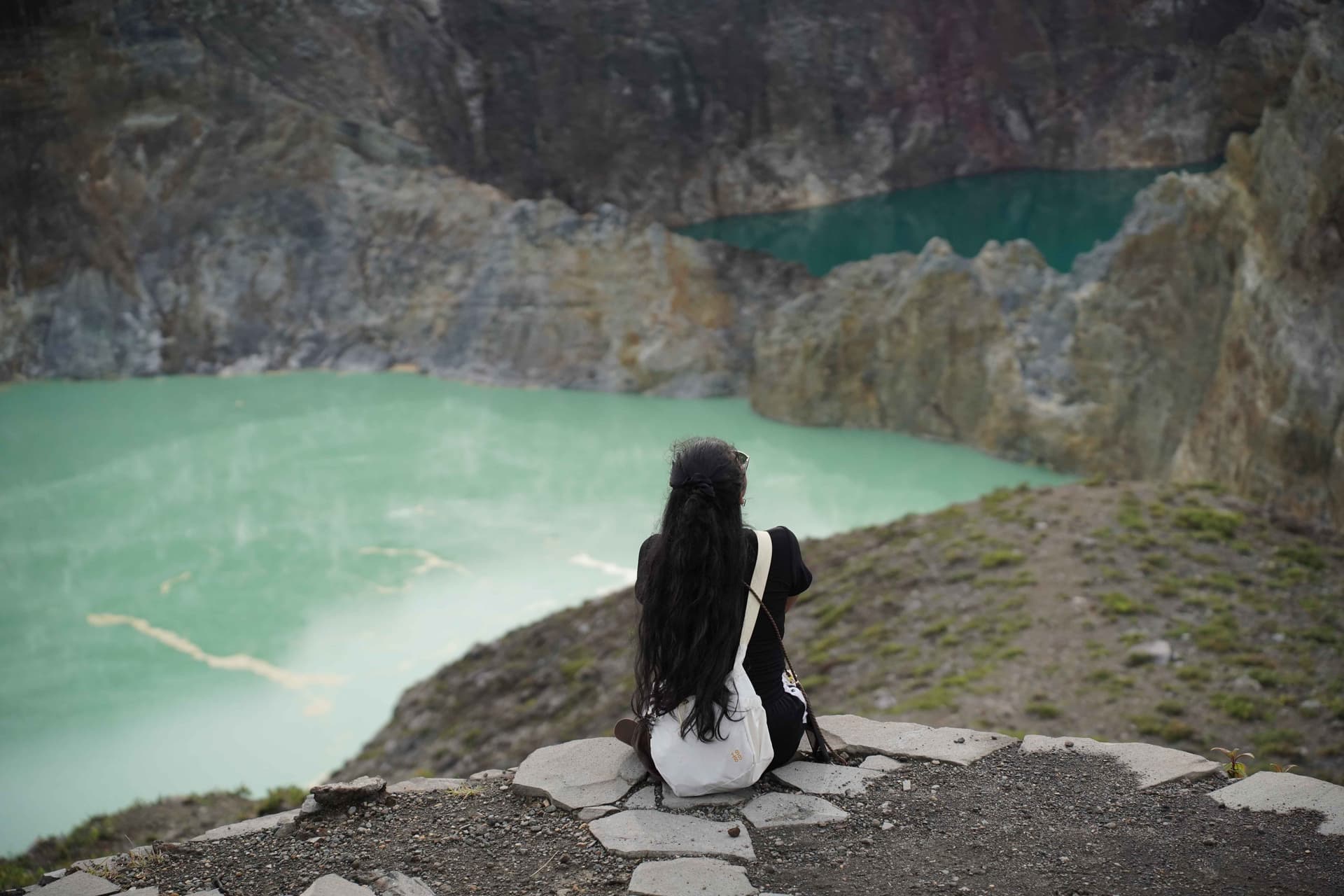
Mystical Kelimutu Sunrise Tour: Explore Flores' Tri-Colored Lakes
flores · 1 Day
Pre-dawn drive to Kelimutu volcano for sunrise over three crater lakes that change color independently. The lakes shift between turquoise, blood red, and ink black — no two visits are the same.
from
$41 USD
The Quiet After
What strikes most travelers after descending is the stillness of the place. Kelimutu isn't a spectacle in the Instagram-highlight sense, there's no zip line, no Instagram-bait structure. It's a crater rim at sunrise, and the three colors, and the fact that you woke up early enough to see them shift. That restraint is part of why it feels genuine.
The crater sits within Kelimutu National Park, managed carefully to limit the daily visitor cap. You won't find crowds, even in peak season. The ranger station can arrange a guide (Rp 150,000–300,000 for a 2–3 hour walk) if you want ecological and geological context, worth it if you're curious about the volcanic system and local history.
When your dates firm up and you're building a Flores itinerary, the sunrise tour here works as a standalone morning or as part of a longer overland sequence. Either way, the tri-color lakes at dawn, that specific light, that specific moment, is what a day at Kelimutu is actually for.
FAQ
What is the best time to visit Kelimutu?
April through November is the dry season, offering the clearest skies and most reliable weather. Kelimutu's tri-color crater lakes are visible year-round at sunrise, but early morning hikes are more comfortable in the cooler, drier months. October and November are ideal, still dry, fewer crowds, and crisp mountain air.
How long does a Kelimutu sunrise visit take?
Most sunrise tours depart Ende around 4:00am and return by 9:00am. The 90-minute drive each way accounts for most of the time; the rim walk itself takes 40–90 minutes depending on pace. If driving independently, you can extend your time on the crater rim or walk both circuits without rushing.
What are the three colors of the Kelimutu lakes, and why do they change?
The turquoise lake contains dissolved sulfur and has low iron content. The reddish-brown lake carries iron oxides from the crater walls, the rust deepens after rainfall. The greenish-gray lake shifts most with light angle and seasonal factors. The colors appear to change throughout the day as sunlight shifts and mineral-laden water reflects differently.
Do I need a guide to visit Kelimutu, and what does a guide cost?
Guides are not required for the main rim trail, which is well-maintained and clearly marked. However, hiring a local ranger guide (Rp 150,000–300,000 for 2–3 hours) enriches the experience with geological and cultural context. The park entrance fee is Rp 150,000 per person; guides are arranged at the ranger station.