We left Pattimura Airport as the sun crested the hills above Ambon Bay, that particular intensity of tropical light that floods a city without mercy. By the time we'd flagged down an ojek heading into town, the humidity had settled thick and warm, the air carrying hints of clove and saltwater drift. This is Ambon off the script: not the colonial history or the UNESCO City of Music designation that dominates guidebooks, but the texture of arrival, the way locals nod from warung doorways, the layered sound of motorbikes mixing with call-to-prayer, the sense that you've landed somewhere that doesn't especially perform for outsiders.
Day 1 — The Waterfront and Market Pulse
We spent the morning walking the Ambon waterfront, where fishing boats nose up against concrete docks and the smell of fresh catch mixes with diesel and bougainvillea. The central market pasar opens around 5am and was mostly wrapping when we arrived at 8:30, but the vendors we spoke with were unhurried, patient with questions about papeda (the sago-and-fish-broth staple) and where to find the best gado-gado. One woman insisted on selling us a bag of cloves Ambon's historical heartbeat at the price she'd have charged locals, no markup.
The walking loop from the port through the Chinese temple area to Merdeka Street takes about 90 minutes at a meandering pace, with plenty of stops at warung for coffee and fried snacks. What struck us most was the absence of tourist bustle. You'll see schoolkids in uniform, construction crews, families on scooters heading to lunch the rhythm of a working city, not a curated destination. That's the point.
Day 2 — Coral and the Banda Periphery
The real shift happened when we booked a half-day boat trip with a local operator (ask at your hotel—they'll know the reliable names) heading northeast toward the Banda Sea approaches. The boat ride itself about 90 minutes each way from Ambon port is where the Moluccas reveal themselves. The water shifts from harbor brown to that specific blue-green that signals coral depth, and the small islands rising out of it feel genuinely remote.
We snorkeled at two sites along this route, neither of them named on most maps. Visibility hovered around 15–18 meters, and we saw staghorn coral gardens, clownfish in host anemones, the occasional reef shark—nothing flashy, but the kind of intact ecosystem you notice when you're actually underwater and not on a schedule. The boat operator moved us slowly, reading tides and current direction with the kind of ease that comes from doing this work year-round.
This is where the deeper Moluccas trips the 4D3N and 7D liveaboard routes into the Banda Sea begin to make sense. If you have the time and budget, the jump from day trips to a multi-day dive liveaboard is worth the investment. The Banda islands themselves, Banda Neira, Run, Ai, Pulau Rhun, sit about 160 kilometers southeast, a full day's sail from Ambon, and the reefs there operate on a different scale.

Banda Sea Diving Liveaboard
ambon · 7D6N
Premium diving liveaboard through the Banda Sea — one of the last frontier dive destinations on Earth. Hammerhead schools, pristine walls, and volcanic seamounts. For experienced divers seeking the extraordinary.
from
$2,839 USD
Day 3 — Seram and the Quiet Zones
On our final full day, we hired a car and driver (roughly Rp 400,000–500,000 per day) and crossed to Seram Island via the ferry from Ambon's eastern docks. The crossing takes about 90 minutes and costs around Rp 50,000 per person. Seram is larger, hillier, and far fewer tourists make the trip, which is precisely why it's worth the logistics.
We spent the day around Ora Beach on Seram's northern coast. The beach itself is low-key: white sand, coconut palms, two or three small warung selling grilled fish and coconut juice. Local kids were playing football (soccer) at one end. We swam, talked with one of the warung owners about the changing tourist patterns, and simply sat—the kind of sitting that travel guides don't really sell but that often matters most.
The key detail: Seram's reefs and beaches function at a slower pace than Ambon's day-trip circuit. If you're planning a longer stay 3–4 days rather than a flying visit the Seram route (combined with Ora Beach and the snorkel sites there) fills time more genuinely than multiple overlapping tours of the same waters.

Ora Beach & Seram Island
ambon · 3D2N
Overwater bungalows at Ora Beach on Seram Island — crystal-clear water, house reef snorkeling from your balcony, and the rainforest-covered mountains of Seram behind you. One of eastern Indonesia's most magical stays.
from
$242 USD
The Rhythm of a Spice-Trade City
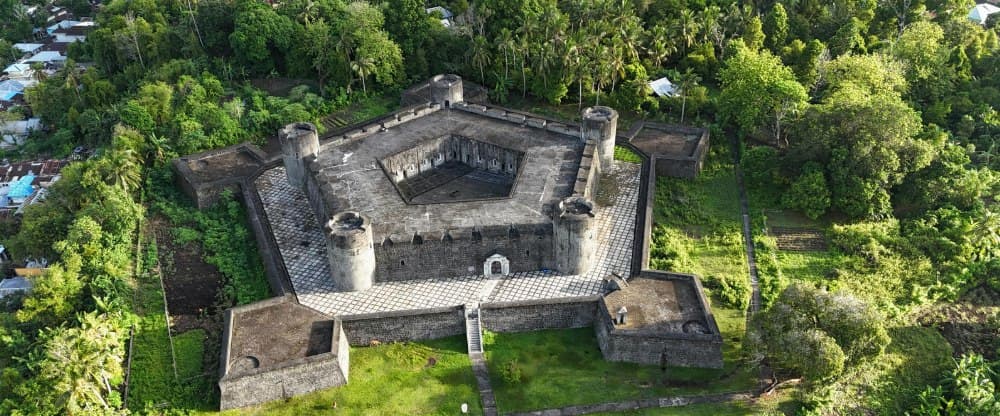
What we carried away from Ambon wasn't a tick-list of "must-sees" but a texture: the feeling of a city that has watched empires rise and fall and has decided to continue on its own terms. The colonial history is there if you seek it—the fort, the old Dutch administrative buildings, the museums but it doesn't dominate the daily life. What dominates is the waterfront, the market, the sound of music practice echoing from homes (Ambon's UNESCO recognition as a City of Music is real; you hear it), and the casual friendliness of people who see occasional travelers but don't depend on them.
The best visits to Ambon pair a few days in town walking, eating, sitting by the water with a day or two on the water. Whether that's a half-day snorkel trip, an overnight to Seram, or a full liveaboard into the Banda Sea depends on your schedule and diving interest. But the pattern that worked for us: arrive without a tight itinerary, let the first day settle into the city's actual rhythm, then venture outward. The outward trips hit harder when you've felt the stillness first.
When your dates firm up, the boats and trips from the docks near Ambon's port are accessible, ask locally, compare operators, and book a day or two ahead.