"Planning your Moluccas adventure? Here are 10 things we'd actually do in Ambon, and why."
Ambon sits at the crossroads of Indonesia's spice-trade history and world-class reef diving. The island draws fewer crowds than Bali or Raja Ampat, which means you get colonial forts beside pristine coral gardens, warung meals that taste like what locals eat daily, and dive sites where you might surface to find yourself alone with manta rays. Whether you're here for history, diving, or that quiet rhythm of island life between explorations, these 10 priorities will shape how Ambon reveals itself.
1. Dive the Banda Sea while it's your calendar window
The Banda Sea, the deep-water channel between Ambon and Banda Neira, roughly 120km south ranks among Asia's most consistent large-pelagic sites. Manta season runs April–November, with peaks in June–August. But even in shoulder months (March, December), the currents that fuel this ecosystem keep nutrients flowing and visibility crisp. School your dates around this: if you can swing June–August, you'll likely see mantis school-feeding and reef sharks hunting the thermocline. If not, April–May and September–November still deliver world-class wall dives and smaller rays. The logistics matter, most dive trips overnight either in Ambon or on a liveaboard anchored in the Banda strait.

Banda Sea Diving Liveaboard
ambon · 7D6N
Premium diving liveaboard through the Banda Sea — one of the last frontier dive destinations on Earth. Hammerhead schools, pristine walls, and volcanic seamounts. For experienced divers seeking the extraordinary.
from
$2,839 USD
Seven-day liveaboards give you seven separate dive days plus night-drift opportunities. Day trips from Ambon town (2–3 hours by speedboat to Banda Neira, then another hour to prime dive sites) compress the experience but save money and hotel time if you're short on days.
2. Walk through Fort Belgica and sit with 350 years of trade-war history
Fort Belgica crowns Banda Neira's hilltop, a squat, geometric stronghold completed by the Dutch in 1611 to enforce their monopoly on nutmeg. Climb to the upper ramparts (steady but not strenuous, ~15 minutes from the main gate) and the geometry becomes clear: sightlines across the harbor, cannon placements, storage vaults below ground. You can walk the perimeter in 45 minutes and linger longer in the museum wing, which holds era artifacts and colonial correspondence. Entry: ~Rp 50,000. Worth the full morning because the Banda Islands' entire modern shape, empty villages, abandoned nutmeg plantations, the eerie quiet, stems from what happened inside that fort between 1600 and 1800. Fort Belgica doesn't exist in a vacuum; it's the key to understanding why Banda Neira feels the way it does.

Banda Neira Historical & Diving Trip
ambon · 4D3N
Explore the Spice Islands where nutmeg reshaped global trade routes. Dive pristine walls around Pulau Hatta, walk colonial forts on Banda Neira, and snorkel volcanic reefs. History and marine life in equal measure.
from
$226 USD
Most historical trips to Banda couple the fort with village walks, warung meals, and at least one dive day in the surrounding waters.
3. Eat at a warung where the owner cooks what their family ate yesterday
Ambon's food culture, makanan lokal centers on seafood, coconut, and spice. Seek out warungs in Ambon town's older quarters (around Jl. Diponegoro, near the central market) where you'll find tinutuan (a savory rice porridge with fish stock), cakalang fufu (smoked pork ribs), and papeda with tinutuan (glutinous sago paired with a yellow turmeric broth). Meal cost: Rp 35–50k per person. The spice heat is real, ask for mild if you're uncertain. Sit at a plastic table, watch the kitchen work, and notice how much technique goes into what looks simple. This is where the real eating in Ambon happens, not in tourist-circuit restaurants. Your palate will thank you, and you'll understand the island's culinary identity in one meal better than a dozen beach resort dinners.
4. Snorkel Ora Beach's lagoon and house reef without a boat
Ora Beach, on Seram Island's eastern face across the Strait, roughly 45 minutes by speedboat from Ambon town, offers something rare: a house reef so close that you wade in from the beach. The lagoon itself is shallow (1–4 meters) and sheltered, ideal for non-divers and families with kids 6+. Coral color here is vivid, fish density high, and the pace slow. You can spend a morning in the water and an afternoon on the sand without the logistics of a full-day boat trip. Entry: included in most island-hopping packages; standalone snorkel trips run ~Rp 600k per person via speedboat operators in Ambon town.

Ora Beach & Seram Island
ambon · 3D2N
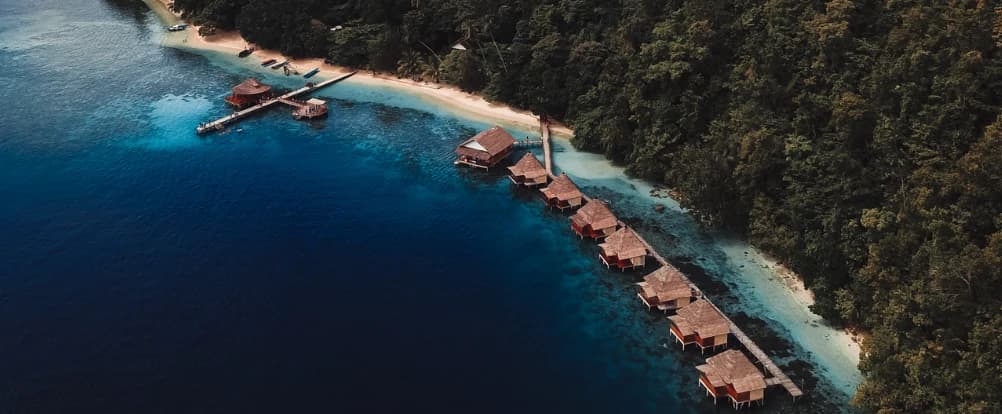
Overwater bungalows at Ora Beach on Seram Island — crystal-clear water, house reef snorkeling from your balcony, and the rainforest-covered mountains of Seram behind you. One of eastern Indonesia's most magical stays.
from
$242 USD
The 3D2N island-hopping itinerary bundles Ora with Seram's northern coast villages, creating a full-day rhythm rather than a single-stop excursion.
5. Kayak through mangrove channels at dawn or dusk
Ambon's mangrove systems particularly around the northeastern coast near Waai shelter juvenile fish, crab species, and wading birds. A 2-hour kayak trip launches before sunrise or in the late afternoon when light angles across the canopy and bird activity peaks. You'll paddle into tunnel-like channels where prop roots are so dense you can almost touch both banks, and the water mirrors the sky so perfectly you lose the horizon. Cost: Rp 300–400k for a guided paddle trip with a local guide from Ambon town (arrange through your hotel). The pace forces you quiet, no motors, no passengers chatting, and the ecosystem reveals itself that way.
6. Climb Gunung Sirimau for panoramic views and local pilgrimage culture
Gunung Sirimau, Ambon's second-highest peak (873 meters), dominates the island's northwestern skyline. The summit trek takes 2–3 hours uphill from the trailhead near Waihaong village, roughly 30km from Ambon town (arrange transport via ojek or private driver). The path is well-trodden locals climb this for pilgrimage as well as exercise and the final climb opens into a rocky summit with 360-degree visibility: the Banda Sea south, the Ceram Strait north, the Moluccas' central geography laid flat below. Go early (start 6am from Waihaong) to catch sunrise from the saddle. Entry: informal, no fee; tips for local guides appreciated.
7. Visit the Ambon War Museum and reckon with World War II Pacific history
The museum, located near the airport in a renovated colonial residence, documents Ambon's role in the Pacific Theater, Japanese occupation, Allied bombardment, and the island's pivotal position in submarine and air-war logistics. The collection includes photographs, weapons, personal letters, and a detailed map of attack routes. Many visitors skip this, which is a loss: understanding Ambon's 20th-century experience adds depth to walking its neighborhoods and seeing damaged heritage structures. Open Tuesday–Sunday, 9am–4pm; entry ~Rp 50,000. Allow 90 minutes for a thoughtful visit.
8. Take a day trip to Hitu village and taste clove-processing traditions
Hitu, on Ambon's northern peninsula, is where clove harvesting has anchored local economy for centuries. Visit during clove season (August–November) and you'll see the full cycle: drying racks in courtyards, the peppery smell saturating entire blocks, families sorting and bundling. Even outside harvest season, clove traders and processors still operate small operations you can visit by appointment (arrange through Ambon town guides or your hotel). The trip is ~90 minutes north from Ambon town by car; combine it with a lunch stop in a local warung and a beach walk at Hitu's rocky shore. This is how Ambon earned its place in global trade seeing the work firsthand, not as museum display but as lived labor, shifts your perspective entirely.
9. Dive the Laha wreck and nearby reef wall in a single day
The Laha wreck a World War II cargo ship resting at 35 meters sits just off Laha Island, about 30 minutes by boat from Ambon's main anchorage. The wreck itself is colonized by soft coral and sea squirts; fish life is moderate but reliable. More compelling is the reef wall adjacent to the wreck: a steep drop from 5 meters down to 40+ meters, thick with white-tip sharks, batfish schools, and occasional large rays. This is a single-dive-day excursion for experienced divers (Advanced Open Water minimum; current-aware diving essential). Budget a half day for the boat commute and mooring, full dive briefing, and safety protocols. Cost: ~Rp 1,200k per person through Ambon-based dive operators.
10. Stay overnight on Banda Neira and let the island's pace shape your rhythm
Banda Neira has no crowds partly because it takes effort to reach (3+ hours from Ambon town), and partly because tourism infrastructure is deliberately minimal. Stay a night or two in one of the handful of small guesthouses (Maulana, Bandaneira, Rumah Budaya are reliable), eat dinner at the warung where the owner sits on a plastic chair watching the harbor, and wake early enough to see the fishing boats return. The island's slowness is the point: you're not here to do Banda Neira in a day; you're here to be in the place long enough that the rhythm becomes yours. The colonial forts, the nutmeg ruins, the dive sites—they'll all be richer when you're not rushing between them.

Banda Neira 4D3N Private Trip
ambon · 4D3N
Four days on the islands Europe once fought over: Banda, where nutmeg first grew. The trip leaves from Tulehu harbour, five hours across by fast boat. The first afternoon goes to Banda Besar — Fort Hollandia, the old nutmeg groves, Sumur Pusaka, and Lonthoir jetty. Day two belongs to the sea: dolphins on the way to Hatta Island, snorkelling there and off Syahrir, then Karaka or the old lava flow if time allows. Day three is deliberately slow — the morning is left open, the afternoon walks Neira itself: Fort Belgica, Nassau, the Mini Palace, the old church, and Hatta's house of exile. Three nights in air-conditioned rooms, every meal, land and sea transport, entrance tickets, a guide, plus photo and drone coverage are included. The Ambon–Banda fast boat ticket is bought separately, as is snorkelling gear.
from
$226 USD
The 4D3N private trip gives you four full days to pace yourself, forts one morning, diving another, village time another, with buffer space for weather delays or a morning where you simply sit on the porch with tea.
Whatever draws you to Ambon—reef diving, colonial history, island solitude, or a blend—the 10 priorities above form the skeleton of a full trip. The specifics of how you string them together (How many days? Which season? Liveaboard or land-based?) shift the experience, but each of these 10 stands up on its own. When your dates firm up, the tours here handle the logistics; your job is choosing which rhythm suits your trip best.